Liberace Las Vegas Showrooms: 1944–1986 Golden Age History
Read Article →
Riviera Hotel & Casino Las Vegas History: The Strip's First High-Rise, Liberace & the 2016 Implosions
The Riviera Hotel and Casino opened on April 20, 1955, at 2901 Las Vegas Boulevard South as the Las Vegas Strip's first high-rise resort, rising nine stories with nearly 300 rooms designed by Miami Beach Modernist architects Roy F. France and Igor B. Polevitzky for a syndicate led by hotelier Samuel H. Cohen. Inaugurated by hostess Joan Crawford and headliner Liberace on a record-shattering $50,000-a-week contract, the Riviera operated for 60 years until closing at noon on May 4, 2015, and falling in two summer 2016 implosions to make way for the Las Vegas Convention Center West Hall.
Before the "Riv" rose on the north Strip, every Highway 91 property from El Rancho Vegas to the Sands imitated horizontal motor courts and ranch lodges. By importing reinforced-concrete verticality, internal elevator lobbies, and formal East Coast resort glamour to the Mojave Desert, the Riviera permanently ended Las Vegas's roadside motel era, even though its original developers went broke within 90 days.

A 1954 Las Vegas News Bureau photograph capturing reinforced-concrete framing on the nine-story Riviera Hotel and Casino, the first true skyscraper resort erected along Highway 91.
In This Article • 5 Archival Photographs
Click any photo to view full size
Archival Landmark Dossier
Street Address
2901 Las Vegas Boulevard South, Winchester, NV
Opening Date
April 20, 1955 (Strip's first 9-story high-rise; ~291–300 rooms)
Original Architects
Roy F. France & Igor B. Polevitzky (Miami Beach Modernism)
Opening Headliner
Liberace ($50,000/week record); Joan Crawford official hostess
Closed & Imploded
Closed May 4, 2015; imploded June 14 & August 16, 2016
Site Today
Las Vegas Convention Center West Hall (opened June 2021)
Why Was the 1955 Riviera Built as the First Nine-Story High-Rise on the Las Vegas Strip?
Originally proposed in December 1952 as a low-slung resort named the Casa Blanca by Los Angeles developer L.B. "Doc" Merman and Miami gambler William "Lefty" Clark Bischoff, the project at 2901 Las Vegas Boulevard South changed course when Miami Beach hotelier Samuel H. Cohen and an investor group from Florida's "Gold Coast" took command in 1953–1954. Rather than hiring Western ranch designers, Cohen brought Miami's Taylor Construction Company and Florida Resort Modernist architects Roy F. France and Igor B. Polevitzky directly to Clark County.
Completed at an unprecedented cost approaching $10 million, double what the Sands had cost barely two years earlier, France and Polevitzky's nine-story T-shaped concrete slab tower soared above surrounding desert scrub, visible for miles across the Las Vegas Valley, as seen in the Riviera archival construction photographs. Guests stepped out of Cadillacs not into dusty exterior motel parking spaces, but into an air-conditioned marble lobby with internal elevators, formal bell captains, European chandeliers, and roughly 300 pastel-appointed rooms modeled on the Eden Roc and Fontainebleau in Miami Beach.
Management initially enforced jacket-and-tie evening dress codes to cultivate Cote d'Azur sophistication. Although local cowboy gamblers scoffed at the formality, every subsequent Strip expansion, from the Sahara's 1960s towers to Milton Schwartz's 1965 Dunes tower, followed the Riviera's vertical blueprint.

Riviera Hotel & Casino 1955-2015 Construction of the Riviera, 1954. Photo: Las Vegas News Bureau.
Why Did Liberace Earn $50,000 a Week at Opening While the Riviera Went Bankrupt in Three Months?
To ensure national headlines on opening night, April 20, 1955, Samuel Cohen recruited Academy Award-winning actress Joan Crawford as official ribbon-cutting hostess and signed flamboyant television pianist Wladziu Valentino Liberace to inaugurate the Clover Room for $50,000 per week, instantly shattering every Las Vegas showroom salary record. Arriving onstage in a custom $50,000 white sheared-beaver cape lined in bridal satin beside his trademark candelabra and Baldwin grand piano, Liberace packed every seat for three solid weeks.
Yet sold-out dinner shows could not rescue Cohen's overextended balance sheet. The Riviera had opened at the start of a brutal 36-day spring 1955 Strip stampede alongside the Royal Nevada (April 19), the Dunes (May 23), and the Moulin Rouge (May 24). Construction cost overruns exceeding $2 million, inexperienced Miami pit bosses who mismanaged casino credit, and fierce talent-bidding wars drained operating reserves almost overnight.
In July 1955, barely three months after Joan Crawford cut the opening ribbon, Cohen's syndicate defaulted on contractor notes and suspended operations, becoming the highest-profile casualty of the mid-1950s Highway 91 room glut.

Riviera Hotel & Casino 1955-2015 Construction of the Riviera, 1954. Timeline, a work in progress.
How Did Gus Greenbaum, the Chicago Outfit, and Dean Martin Stabilize the Riviera?
With millions in hidden Chicago Outfit capital imperiled inside the shuttered tower, syndicate bosses Tony Accardo and Jake Guzik turned to the one casino executive proven capable of rescuing an overbuilt Strip palace: Gus Greenbaum, who had turned Bugsy Siegel's money-losing Flamingo into a cash machine after 1947 before retiring to Phoenix. Pressured intensely, including threats and family intimidation, Greenbaum reluctantly returned to Las Vegas in August 1955 as Riviera president alongside experienced casino partners Ross Miller, Davie Berman, Willie Alderman, and Sid Wyman.
Slashing bloated Miami overhead, tightening pit surveillance, and relaxing stuffy dress rules, Greenbaum made the Riviera profitable within months. Tragically, Greenbaum slipped into heavy heroin, alcohol, and gambling habits while skimming from his own syndicate backers; on December 3, 1958, contract killers murdered Gus and his wife Bess inside their Phoenix home, though the Riviera casino machinery he built kept humming smoothly across the street from the newly opened Stardust Resort.
Throughout the 1960s, the Riviera rivaled the Sands for Rat Pack star power. Entertainer Dean Martin purchased a licensed minority points stake after leaving the Sands and headlined the enlarged Versailles Room, where a 21-year-old Broadway newcomer named Barbra Streisand famously opened for returning star Liberace in July 1963 before becoming a headliner in her own right.

Riviera Hotel & Casino 1955-2015 Construction of the Riviera, 1954. ‘52: Dec., Casa Blanca Hotel proposed by LB “Doc” Merman (Los Angeles) and W.
How Did Meshulam Riklis, Splash, and the Crazy Girls Bronze Statue Define the 1970s–1990s Riviera?
Corporate consolidation swept out the Greenbaum-era point holders in June 1968 when Parvin-Dohrmann Company bought the Riviera, selling it in 1973 for $56 million to Boston tour operator American International Travel Service (AITS), soon controlled by flamboyant Israeli-American corporate takeover financier Meshulam Riklis. Under Riklis (who plastered Strip billboards with portraits of his wife, Golden Globe-winning newcomer Pia Zadora, and booked her alongside Frank Sinatra in the Versailles Room) the Riviera expanded aggressively into a mass-market convention giant, adding the 17-story Monte Carlo Tower and, between 1988 and 1990, the 24-story Monaco Tower to surpass 2,100 rooms and a 100,000-square-foot casino floor.
Even as Riklis pushed the parent company through Chapter 11 restructurings in 1983 and 1991, two long-running Riviera revues became pop-culture fixtures. In June 1985, choreographer-producer Jeff Kutash debuted Splash, an MTV-paced "aquacade" centered on a 20,000-gallon onstage glass diving tank alongside motorcycle "Globe of Death" stunt riders, running 21 years until 2006.
Two years later, in September 1987, producer Norbert Aleman launched the intimate topless cabaret Crazy Girls. To mark the show's tenth anniversary in 1997, artist Michael Conine cast life-size molds of seven cast members to create the sidewalk bronze monument "No Ifs, Ands, or..." along Las Vegas Boulevard, polished gleaming gold by millions of passing tourists rubbing the seven bronze backsides for gambling luck until the resort closed in 2015.

Riviera Hotel & Casino 1955-2015 Construction of the Riviera, 1954. “Lefty” Clark Bischoff (Miami).
Why Did Martin Scorsese Film the 1995 Movie Casino Inside the Real Riviera?
Filmgoers watching Martin Scorsese's 1995 crime epic Casino, adapted from Nicholas Pileggi's nonfiction chronicle of Frank "Lefty" Rosenthal and Tony Spilotro at the Stardust, are actually looking straight across the Riviera's real gaming floor. When Scorsese and production designer Dante Ferretti scouted Las Vegas in early 1994, Boyd Gaming had already remodeled the Stardust interior with 1990s finishes and declined to host a movie depicting its 1970s skimming scandal.
Directly across the boulevard, however, the Riviera's vast, low-ceilinged 100,000-square-foot casino pit preserved authentic late-1970s sightlines, mirrored soffits, and brass slot carousels. For six consecutive weeks in September and October 1994, Scorsese and Oscar-winning cinematographer Robert Richardson filmed inside the active Riviera, redressed with signage as the fictional "Tangiers", working four nights a week from 1:00 a.m. to 11:00 a.m. while real gamblers played twenty feet outside the camera frame alongside Robert De Niro, Sharon Stone, and Joe Pesci.
Over subsequent decades, the photogenic vintage casino also hosted location shoots for Austin Powers: International Man of Mystery (1997), Go (1999), 21 (2008), and The Hangover (2009), where the fictional "Villa Riviera" stood in during vintage-style blackjack sequences.
When Did the Riviera Close and Why Were Its Towers Imploded Twice in Summer 2016?
Stranded on the quiet north Strip after neighboring Stardust (2006), New Frontier (2007), and Sahara (2011) shuttered around it, the Riviera slipped through another bankruptcy in 2010 before the Las Vegas Convention and Visitors Authority (LVCVA) stepped forward in February 2015. Seeking contiguous boulevard frontage to expand the adjacent Las Vegas Convention Center, the LVCVA board voted to purchase the 26-acre Riviera property from Starwood Capital-led owners for $182.5 million plus $8.5 million in transaction and wind-down costs.
Exactly two weeks after celebrating its 60th anniversary, the Riviera closed its casino and hotel doors permanently at 12:00 p.m. on May 4, 2015, relocating the bronze Crazy Girls sculpture to Planet Hollywood. Because the sprawling resort encompassed multiple reinforced-concrete towers across 26 acres, Controlled Demolition, Inc. executed two separate summer blasts within the Las Vegas Strip casino implosions timeline.
First, at 2:37 a.m. on June 14, 2016, explosives dropped the 24-story Monaco Tower amid a pre-dawn fireworks salute; nine weeks later, at 2:30 a.m. on August 16, 2016, a final detonation felled the 17-story Monte Carlo Tower and remaining original low-rise wings, bringing down the historic nine-story 1955 core in stages alongside it. In June 2021, the LVCVA opened its $1 billion, 1.4-million-square-foot Las Vegas Convention Center West Hall across the former Riviera footprint.
| Date | Riviera Hotel & Casino Milestone | Key Figures & Architectural Details |
|---|---|---|
| April 20, 1955 | Riviera opens at 2901 Las Vegas Blvd S as first high-rise | Samuel Cohen syndicate; 9 stories by France & Polevitzky; Liberace ($50k/wk) |
| July – August 1955 | 90-day bankruptcy and Gus Greenbaum syndicate rescue | Former Flamingo chief Gus Greenbaum & Ross Miller stabilize casino profits |
| 1960s – July 1963 | Dean Martin points era; Streisand opens for Liberace | Versailles Room becomes Rat Pack anchor; Parvin-Dohrmann buys resort in 1968 |
| 1973 – 1990 | Meshulam Riklis takeover; Monte Carlo & Monaco Towers | Capacity passes 2,100 rooms; Splash (1985) and Crazy Girls (1987) debut |
| Sept – Oct 1994 | Martin Scorsese shoots Casino overnight inside Riviera | Stands in for fictional "Tangiers" with Robert De Niro, Sharon Stone & Joe Pesci |
| Feb – May 4, 2015 | LVCVA buys 26-acre site for $182.5M; resort closes at noon | Shuttered just days after marking 60th anniversary on the north Strip |
| June 14 & Aug 16, 2016 | Dual implosions of Monaco and Monte Carlo Towers | Cleared for $1B, 1.4M-sq-ft LVCC West Hall (opened June 2021) |
Frequently Asked Questions
Where is the Riviera's bronze Crazy Girls statue located today?
Michael Conine's 1997 life-size bronze sculpture "No Ifs, Ands, or...", depicting the backsides of seven Crazy Girls dancers, was removed before the Riviera closed on May 4, 2015, and reinstalled at Planet Hollywood Resort & Casino when the show relocated there. After the stage show ended during 2020–2021, owner Derek Stevens acquired the bronze statue for Downtown's Circa Resort.
Why was the Riviera important in Las Vegas Strip architectural history?
Opening on April 20, 1955, the Riviera broke the two-story highway motor-court pattern established by El Rancho Vegas (1941), Hotel Last Frontier (1942), Flamingo (1946), Desert Inn (1950), and Sands (1952). Designed by Miami Beach architects Roy F. France and Igor B. Polevitzky, its nine-story concrete slab tower introduced vertical resort hotels and indoor elevator lobbies to the Strip.
How much was Liberace paid to open the Riviera in April 1955?
Samuel Cohen's Miami investor group paid pianist Liberace an unprecedented $50,000 per week for a three-week engagement opening the Riviera's Clover Room on April 20, 1955, roughly equivalent to more than $580,000 per week in modern purchasing power. Liberace matched the publicity stunt by stepping onstage in a $50,000 white sheared-beaver cape.
What replaced the Riviera Hotel and Casino after its 2016 implosions?
Following the June 14, 2016 implosion of the 24-story Monaco Tower and the August 16, 2016 implosion of the 17-story Monte Carlo Tower, the Las Vegas Convention and Visitors Authority constructed the $1 billion, 1.4-million-square-foot Las Vegas Convention Center West Hall on the 26-acre parcel at 2901 Las Vegas Boulevard South, opening in June 2021.
Curated Historical Bibliography
Recommended Las Vegas History Books
Recommended historical books and architectural studies covering this landmark. As an Amazon Associate, LasVegasArchive.com earns from qualifying purchases.
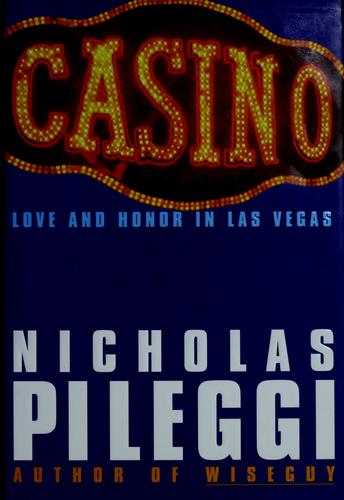
Casino: Love and Honor in Las Vegas
Explains the real 1970s north Strip mob operations later recreated on camera inside the Riviera's 100,000-square-foot casino floor.
View Hardcover on Amazon ↗
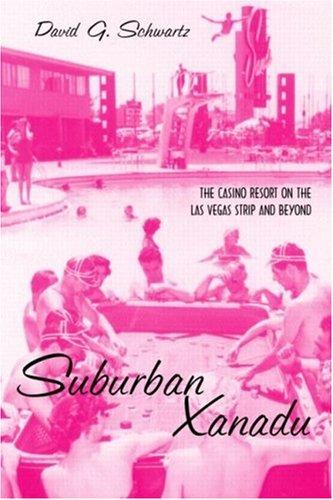
Suburban Xanadu: The Casino Resort on the Las Vegas Strip and Beyond
Details Samuel Cohen's 1955 Miami high-rise gamble, the spring 1955 room glut, and Gus Greenbaum's financial turnaround.
View Hardcover on Amazon ↗
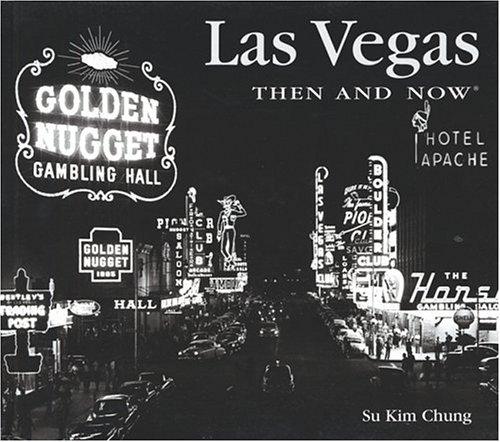
Las Vegas Then and Now
Pairs UNLV Special Collections photographs of the 1955 nine-story Riviera against modern north Strip redevelopment.
View Hardcover on Amazon ↗
1944–1986 • Casino Showrooms
5 Photos

Mob Skim & Gaming Control • 1974–1988
5 Photos

Frank Lefty Rosenthal Stardust True History Behind Casino
Read Article →
1958–2007 • Strip Icons
5 Photos

Stardust Hotel & Casino Las Vegas History (1958–2007)
Read Article →
1955–1993 • Strip Icons
5 Photos

Dunes Hotel & Casino Las Vegas History (1955–1993)
Read Article →
