Riviera Hotel & Casino Las Vegas History (1955–2016)
Read Article →
Liberace & Las Vegas Showrooms: How 'Mr. Showmanship' Built the Golden Age of the Strip (1944–1986)
Wladziu Valentino Liberace invented the theatrical Las Vegas casino residency between his 1944 debut in the Ramona Room at the Hotel Last Frontier (3120 Las Vegas Blvd S) and his record-shattering $50,000-a-week opening of the Riviera Hotel's Clover Room (2901 Las Vegas Blvd S) on April 20, 1955. Over the next four decades until his final Caesars Palace engagement in August 1986 and death on February 4, 1987, the Wisconsin-born pianist turned hotel dining rooms into sequined arenas subsidized directly by high-roller casino drop.
Before Liberace arrived on Highway 91, Nevada casino entertainment consisted mostly of Western swing trios, novelty acrobats, and polite supper-club crooners hired to keep motorists eating near the craps pits. By fusing conservatory Liszt and Chopin technique with rhinestone furs, custom Rolls-Royce stage entrances, and self-deprecating banter, 'Mr. Showmanship' triggered a Strip talent arms race that forced rival operators at the Stardust, Tropicana, and Dunes to import multi-million-dollar Parisian production revues.

Liberace, January 28, 1978. $55K bath in the Las Vegas mansion.
In This Article • 5 Archival Photographs
Click any photo to view full size
Archival Landmark Dossier
Strip Debut
1944, Ramona Room at Hotel Last Frontier (3120 Las Vegas Blvd S)
Record Contract
$50,000/week opening the Riviera Clover Room on April 20, 1955
Showroom Schedule
8:00 p.m. dinner show & midnight cocktail show ($3–$10 minimum)
Key Proteges & Guests
Elvis Presley (Nov 1956 swap) & Barbra Streisand (July 1963 opener)
Liberace Museum
1775 E Tropicana Ave (Opened April 15, 1979; closed Oct 17, 2010)
Final Vegas Engagement
August 1986, Circus Maximus Showroom at Caesars Palace
How Did Liberace's 1944 Hotel Last Frontier Booking Reinvent Casino Entertainment?
Born on May 16, 1919 in West Allis, Wisconsin, Wladziu Valentino Liberace trained at the Wisconsin College of Music on a seventeen-year scholarship and soloed with Frederick Stock's orchestra in Chicago at age sixteen. By the early 1940s, touring classical recitals paid poorly, prompting him to experiment in supper clubs under the stage name Walter Busterkeys before dropping his first names altogether. In 1944, entertainment director Maxine Lewis booked the twenty-five-year-old pianist into the sandstone-and-timber Ramona Room at the Hotel Last Frontier on Highway 91 for roughly $750 to $1,500 per week.
Facing restless gamblers, cattlemen, and off-duty war-plant workers who talked loudly over orchestral intros, Liberace discarded stiff recital protocol. He placed a gleaming brass candelabrum, inspired by the biopic A Song to Remember about Frédéric Chopin, directly on the lid of his Baldwin grand piano, stripped slow movements out of classical sonatas, a method he cheerfully called 'classical music with the boring parts left out', and followed Chopin's Polonaise in A-flat with novelty requests like 'Three Little Fishes.'
During an afternoon lighting rehearsal for that 1944 Ramona Room run, a lanky stranger in rumpled khaki trousers and sneakers climbed a ladder in the empty showroom to help Liberace balance the amber and pink spotlights on his face and hands. Only after the stranger vanished did hotel management inform the stunned pianist that his uncredited lighting technician was aviation industrialist Howard Hughes, who would return twenty-two years later to buy up much of the Strip.

Dorothy McMahon, Liberace’s maid at his Las Vegas mansion, August 14, 1987. Photo by Paul Harris.
Why Did the Riviera Pay Liberace a Record $50,000 a Week on April 20, 1955?
By 1954, Liberace's syndicated Guild Films television program aired on more than 215 stations to 35 million weekly viewers, outselling contemporary broadcasts by Frank Sinatra and Arturo Toscanini. When a Miami syndicate led by Samuel Cohen and Gus Greenbaum rushed to finish the nine-story Riviera Hotel & Casino at 2901 Las Vegas Blvd S, the first true high-rise on the Strip, management needed a box-office sensation capable of pulling crowds past established rivals at the Flamingo, Desert Inn, Sands, and Sahara.
Preserved in the Riviera's 1954–1955 construction photographs, the rapid high-rise buildout culminated on opening night, April 20, 1955, when Liberace walked onto the Clover Room stage under a three-week contract paying $50,000 per week, making him the highest-paid live entertainer in Las Vegas history. Introduced by television hostess Joan Crawford and backed by an orchestra conducted by his violinist brother George Liberace, he unveiled a $15,000 white sheared-beaver cape dragging sixteen feet across the stage floor. Across later Riviera and Hilton engagements, his wardrobe escalated to a 135-pound virgin-fox cape, suits wired with miniature battery-powered Christmas lights, and chauffeur-driven stage entrances inside a mirrored 1962 Rolls-Royce Phantom V encrusted with more than one million Austrian rhinestones.
Liberace also used his Riviera perch to champion younger unconventional performers. In November 1956, seven months after twenty-one-year-old Elvis Presley endured lukewarm reviews from middle-aged gamblers at the neighboring New Frontier, Liberace invited Presley backstage at the Riviera, where the two traded glittery dinner jackets and posed together on piano bench and guitar for wire-service photographers, rehabilitating Presley's Las Vegas standing. Seven years later, in July 1963, Liberace personally hired twenty-one-year-old Broadway newcomer Barbra Streisand as his Riviera opening act after watching her New York nightclub set, introducing her quirkier vocal style gently to skeptical casino audiences.

Liberace 4993 Wilbur St Las Vegas NV 89119 His driver’s license was not yet expired when it was auctioned along with other personal items by Butterfield & Butterfield and Christie’s in 1988. The license sold for $4K.
How Did Dinner-and-Cocktail Showroom Economics Subsidize Mid-Century Headliners?
Even at 100 percent capacity, a 600-to-800-seat showroom like the Riviera's Clover Room, the Sands' Copa Room, or the Desert Inn's Painted Desert Room could never recoup a $50,000 weekly performer fee through food and drink checks alone. Mid-century Las Vegas casinos issued no numbered box-office tickets. Instead, properties staged two performances nightly: an 8:00 p.m. dinner show where patrons paid solely the menu price of a prime-rib, roast-duck, or filet-mignon entree ($4.50 to $10.00 in the late 1950s), and a 11:45 p.m. or midnight cocktail show requiring only a two-to-three-drink minimum ($3.00 to $5.50).
Seating hierarchy operated entirely through cash gratuities handed to the showroom maitre d' and his captains at the velvet rope. High-limit craps and baccarat players received complimentary 'RFB' (room, food, and beverage) line passes escorted straight to center-ring Booth One. Everyday tourists folded a $5, $10, or $20 bill into a handshake at the podium to avoid long bench tables stacked perpendicular to the stage, known in Strip parlance as 'starlight seating', or sightlines blocked by structural columns.
Casino accountants categorized the entertainment budget strictly as customer acquisition cost. A sold-out Liberace run delivered 1,400 affluent matrons and their husbands through the casino pit twice each evening; once husbands drifted toward the roulette wheels and craps layouts before the 8:00 p.m. seating and after the 1:15 a.m. encore, house edge drop easily absorbed weekly showroom deficits.

Backstage at the Dunes, November 1957 - Photos by Hy Peskin. Peskin photographed Minsky Goes to Paris for a feature in Playboy Magazine, Apr ‘58, in which he was un-credited.
How Did Lido de Paris, Folies Bergere, and Minsky's Follies Reshape Strip Production Shows?
Liberace's $50,000 Riviera payday triggered severe wage inflation across Highway 91, as Judy Garland, Marlene Dietrich, Noel Coward, and Elvis Presley demanded comparable five-figure weekly guarantees, yet left casinos scrambling to fill the remaining forty-six weeks of the calendar whenever stars went back on tour. Between 1957 and 1963, Strip operators solved the headliner bottleneck by importing lavish European revue franchises in which hydraulic stagecraft, feathered costumes, and topless choreography became the permanent attraction.
On January 17, 1957, burlesque impresario Harold Minsky opened Minsky's Follies inside the Arabian Room at the struggling Dunes Hotel, introducing bare-breasted showgirls to the Las Vegas Strip and rescuing the property overnight with 24,000 paid admissions in its opening weeks. Eighteen months later, on July 2, 1958, producer Donn Arden inaugurated the 1,032-room Stardust Resort & Casino with a $500,000 adaptation of Paris's Lido de Paris inside the 700-seat Café Continental, deploying six hydraulic stage elevators, a retractable ice-skating rink, indoor waterfalls, and simulated shipwrecks across a thirty-two-year run.
Not to be outdone, entertainment director Lou Walters, father of journalist Barbara Walters, brought Paris's Folies Bergere to the Tropicana's Theatre Restaurant on Christmas Eve 1959, launching a nearly fifty-year residency that ran until March 28, 2009. Producer Frédéric Apcar completed the French quartet at the Dunes in December 1963 with Casino de Paris starring Parisian singer Line Renaud.
| Debut Date | Resort & Venue | Headliner or Production | Financial & Theatrical Milestone | Run Duration |
|---|---|---|---|---|
| 1944 | Hotel Last Frontier (Ramona Room) | Liberace | $750–$1,500/week; candelabrum & pop-classical banter debut | Recurring 1940s engagements |
| Apr 20, 1955 | Riviera (Clover Room) | Liberace | Record $50,000/week salary; 16-foot white sheared-beaver cape | Recurring flagship headliner |
| Jan 17, 1957 | Dunes (Arabian Room) | Minsky's Follies (Harold Minsky) | First topless showgirl production on the Las Vegas Strip | 1957–1961 |
| Jul 2, 1958 | Stardust (Café Continental) | Lido de Paris (Donn Arden) | $500,000 stage with hydraulic lifts, rain curtain & ice rink | Jul 1958 – Feb 1991 (32 years) |
| Dec 24, 1959 | Tropicana (Theatre Restaurant) | Folies Bergere (Lou Walters / Jerry Jackson) | Longest-running vintage French feathers-and-cancan revue in Vegas | Dec 1959 – Mar 2009 (49 years) |
| Dec 23, 1963 | Dunes (Casino de Paris Room) | Casino de Paris (Frédéric Apcar) | Headlined by Line Renaud; multi-tier European specialty acts | Dec 1963 – 1981 (17 years) |
| Apr 26, 1974 | MGM Grand (Ziegfeld Room) | Hallelujah Hollywood! (Donn Arden) | $4.5M MGM musical tribute with live lion & 120-person cast | Apr 1974 – 1980 |
| Aug 1986 | Caesars Palace (Circus Maximus) | Liberace | Final Las Vegas Strip residency before Oct–Nov 1986 Radio City farewell | Final Vegas run |

Riviera Hotel & Casino 1955-2015 Construction of the Riviera, 1954. Most gaming applicants would change in '53.
What Happened to the Liberace Museum on Tropicana Avenue and His Final 1986 Shows?
While French revues anchored rival properties, Liberace remained Las Vegas's top solo tourist magnet throughout the 1970s and early 1980s at the Las Vegas Hilton, where he surpassed Elvis Presley's attendance marks in 1972 while earning $300,000 a week, and at Caesars Palace. On April 15, 1979, he opened the Liberace Museum inside a strip shopping center he owned at 1775 E Tropicana Ave, two miles east of Las Vegas Boulevard, routing proceeds into the nonprofit Liberace Foundation for the Performing and Creative Arts to fund university music scholarships.
At its peak in the 1980s, the Tropicana Avenue complex drew roughly 450,000 visitors a year, ranking alongside Hoover Dam among Southern Nevada's busiest paid attractions. Across three buildings, guests inspected eighteen rare and rhinestone-covered pianos (including a Pleyel instrument played by Chopin), the mirrored 1962 Rolls-Royce Phantom V, a custom red-white-and-blue Bicentennial Rolls-Royce convertible, the 200-pound King Neptune cape, and the world's largest Austrian crystal rhinestone, a fifty-pound, 115,000-carat prism gifted by Swarovski.
Liberace played his final Las Vegas Strip residency inside the Circus Maximus showroom at Caesars Palace in August 1986, flying onstage in harnesses despite rapidly failing health, before completing twenty-one sold-out performances at New York's Radio City Music Hall ending November 2, 1986. He died of AIDS-related pneumonia at his retreat in Palm Springs, California, on February 4, 1987, at age sixty-seven. Declining off-Strip foot traffic during the Great Recession forced the Liberace Museum at 1775 E Tropicana Ave to close on October 17, 2010, though the Liberace Foundation continues exhibiting his cars, pianos, and stage costumes through the Liberace Garage and Thriller Villa in Las Vegas.
Frequently Asked Questions
How much was Liberace paid to open the Riviera Hotel in 1955?
Liberace received $50,000 per week for a three-week engagement opening the Clover Room at the Riviera Hotel & Casino on April 20, 1955. That $150,000 guarantee shattered all previous Las Vegas Strip performer records, roughly doubling contemporary fees paid to Danny Thomas and Noel Coward, and established the economic template for high-priced celebrity residencies.
Where was the Liberace Museum located in Las Vegas and when did it close?
The Liberace Museum operated inside the Liberace Plaza shopping center at 1775 E Tropicana Ave, roughly two miles east of the Las Vegas Strip near Spencer Street. Liberace personally opened the attraction on April 15, 1979 to fund performing-arts scholarships, and it operated for thirty-one years before closing to daily public walk-ins on October 17, 2010.
Did Barbra Streisand really open for Liberace in Las Vegas?
Yes. In July 1963, twenty-one-year-old Barbra Streisand made her Las Vegas debut as the featured opening act for Liberace in the Riviera Hotel showroom. Liberace had admired her New York nightclub performances and spent several minutes onstage each night preparing conservative casino diners for Streisand's unconventional phrasing and vintage thrift-shop wardrobe.
Which French showgirl revue ran the longest on the Las Vegas Strip?
The Tropicana's Folies Bergere held the longevity record among classic Parisian-style Strip revues, opening on Christmas Eve, December 24, 1959, inside the Theatre Restaurant and closing on March 28, 2009 after more than forty-nine years. Donn Arden's Jubilee! at the original MGM Grand/Bally's ran thirty-four years (1981–2016), while Stardust's Lido de Paris ran thirty-two years (1958–1991).
Curated Historical Bibliography
Recommended Las Vegas History Books
Recommended historical books and architectural studies covering this landmark. As an Amazon Associate, LasVegasArchive.com earns from qualifying purchases.
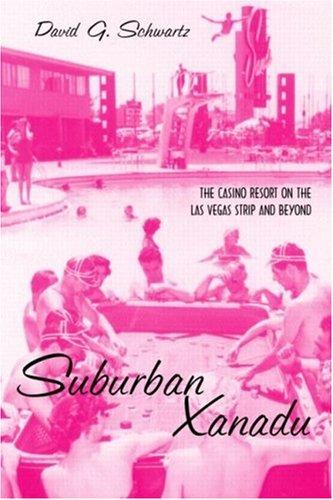
Suburban Xanadu: The Casino Resort on the Las Vegas Strip and Beyond
Traces how 1950s Strip resort operators used loss-leader showrooms, maitre d' seating systems, and European revues to drive casino pit volume.
View Hardcover on Amazon ↗
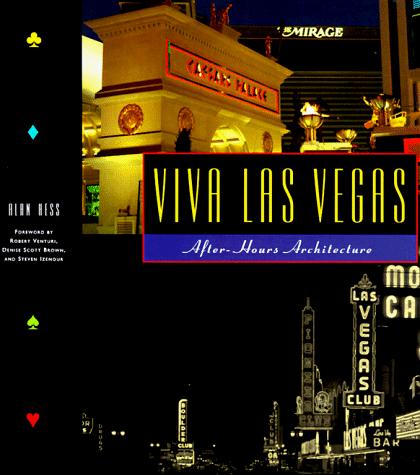
Viva Las Vegas: After-Hours Architecture
Examines the architectural staging of the Riviera, Stardust, Dunes, and Tropicana showrooms during the Strip's mid-century expansion.
View Hardcover on Amazon ↗
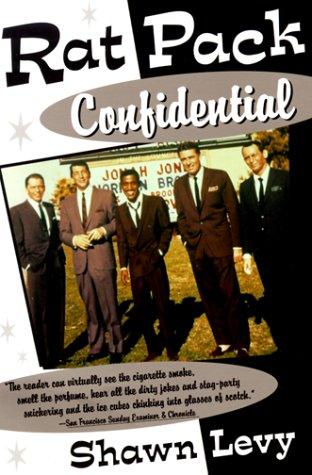
Rat Pack Confidential: Frank, Dean, Sammy, Peter, Joey and the Last Great Showbiz Party
Contrasts Liberace's family-friendly rhinestone theatrics at the Riviera with the hard-drinking Copa Room summit era down the Strip at the Sands.
View Hardcover on Amazon ↗
1955–2016 • Strip Icons
5 Photos

1958–2007 • Strip Icons
5 Photos

Stardust Hotel & Casino Las Vegas History (1958–2007)
Read Article →
Showroom Golden Age • 1969–1976
5 Photos

Elvis Presley International Hotel Las Vegas History (1969–76)
Read Article →
1955–1993 • Strip Icons
5 Photos

Dunes Hotel & Casino Las Vegas History (1955–1993)
Read Article →
