Stardust Hotel & Casino Las Vegas History (1958–2007)
Read Article →
Frank Lefty Rosenthal Stardust True History: Tony Spilotro, Argent Corp & Scorsese’s Casino
Between May 1974 and the early 1980s at 3000 Las Vegas Boulevard South, Chicago sports handicapper Frank “Lefty” Rosenthal covertly ran San Diego developer Allen Glick’s Teamsters-financed Argent Corporation(controlling the Stardust, Fremont, Hacienda, and Marina casinos) while boyhood friend and Chicago Outfit enforcer Anthony “Tony the Ant” Spilotro policed the street rackets until FBI wiretaps and a 1982 car bombing shattered the Midwest Mafia’s grip on the Strip. Dramatized by director Martin Scorsese and author Nicholas Pileggi in the 1995 film Casino, nearly every major plot turn, from Rosenthal’s rotating job titles and onstage television talk show to the steel chassis plate that saved his life, came straight from Nevada Gaming Commission transcripts and federal indictments.
Separating Hollywood composite scenes from archival fact reveals how the last great Las Vegas casino skim actually functioned. While Wall Street corporations like Hilton and MGM were building legitimate megaresorts down the highway, bosses in Chicago, Kansas City, Milwaukee, and Cleveland quietly extracted millions in untaxed cash from the Stardust count room, until Spilotro’s violent side burglaries and Rosenthal’s volatile marriage to former showgirl Geraldine “Geri” McGee drew unprecedented federal heat.

Tony Cornero’s Stardust under construction, 1954-1955. The name “Stardust” was chosen by the hotel-casino’s founder Tony Cornero, “Tony the Hat,” a Southern California bootlegger and gambling entrepreneur.
In This Article • 5 Archival Photographs
Click any photo to view full size
Archival Landmark Dossier
Flagship Casino
Stardust Resort & Casino, 3000 Las Vegas Boulevard South
Argent Corp. Portfolio
Stardust, Fremont, Hacienda & Marina (1974, via $62.75M+ Teamsters loans)
Key Real-Life Figures
Frank “Lefty” Rosenthal, Anthony “Tony” Spilotro, Geri McGee & Allen Glick
Hole in the Wall Raid
July 4, 1981 FBI ambush at Bertha’s Gifts (896 E Sahara Ave)
Car Bombing Survival
October 4, 1982 outside Tony Roma’s (620 E Sahara Ave) in a 1981 Eldorado
Mob Endings
Spilotro brothers murdered June 14, 1986; Rosenthal Black Booked Dec. 1988
How Did Allen Glick’s Argent Corporation Acquire Four Las Vegas Casinos with Teamsters Loans in 1974?
In May 1974, 32-year-old Ohio State law graduate, Bronze Star Vietnam veteran, and San Diego real-estate executive Allen R. Glick stunned Strip insiders by purchasing Recrion Corporation’s Stardust, Downtown’s Fremont Hotel, and the south-Strip Hacienda, soon adding casino operations at the Marina Hotel (3805 Las Vegas Boulevard South), under a newly formed holding company named Argent Corporation (an acronym for Allen R. Glick Enterprises).
With virtually none of his own equity at risk, Glick received an initial $62.75 million loan package from the Teamsters Central States, Southeast and Southwest Areas Pension Fund, which swelled past $150 million in subsequent draws. Unbeknownst to Nevada regulators at first, Glick’s financing had been greenlit through Milwaukee boss Frank Balistrieri, Kansas City boss Nick Civella and underboss Carl “Tuffy” DeLuna, Cleveland acting boss Angelo Lonardo, and Chicago Outfit leaders Joseph “Joey Doves” Aiuppa and Jackie Cerone.
In return for pension-fund capital, untaxed cash was systematically skimmed off the top inside the Stardust and Fremont count rooms, using rigged scale weights on coin buckets and unrecorded marker boxes, before couriers ferried suitcases of bills to Kansas City for division among the four Midwest families.
| Scorsese’s Casino (1995) | Real Historical Person / Place | Verified Historical Record |
|---|---|---|
| Sam “Ace” Rothstein | Frank “Lefty” Rosenthal (1929–2008) | Chicago oddsmaker installed in 1974 to run Argent’s casinos; survived Oct. 4, 1982 Cadillac bombing; Black Booked in 1988. |
| Nicky Santoro | Anthony “Tony” Spilotro (1938–1986) | Outfit enforcer sent to Vegas in 1971; ran Gold Rush Ltd. & Hole in the Wall Gang; beaten to death June 14, 1986 in Bensenville, IL. |
| Ginger McKenna | Geraldine “Geri” McGee (1936–1982) | Former Tropicana showgirl who married Rosenthal in May 1969; had affair with Spilotro; died of LA overdose Nov. 9, 1982. |
| Philip Green | Allen R. Glick (1942–2021) | San Diego attorney/frontman for Argent Corp.; later testified as key government witness in 1985 Operation Strawman trials. |
| Tangiers Resort | Stardust Resort & Casino | 3000 Las Vegas Blvd S flagship where Rosenthal launched his luxury Race & Sports Book and Saturday TV show. |
| Senator / Gaming Chair | Harry Reid (Gaming Commission Chair) | Presided over Rosenthal’s fiery Jan. 1976 license denial; FBI defused an attempted car bomb on Reid’s family car in 1978. |

Tony Cornero’s Stardust under construction, 1954-1955. The name was inspired by the 1920s jazz standard of the same name.
Why Did Frank “Lefty” Rosenthal Rotate Job Titles and Build the Stardust Race and Sports Book?
To guarantee peak profits inside the Stardust, the Chicago Outfit installed 45-year-old Frank “Lefty” Rosenthal, the sharpest football and basketball line-maker in America, who carried nolo contendere bribery convictions and dozens of Fifth Amendment invocations from 1960s Senate Rackets Committee hearings. Obsessive down to counting equal blueberries in kitchen muffins, Rosenthal fired thieving 21 dealers, redesigned pit sightlines, and doubled Stardust casino win within eighteen months.
After Congress lowered the federal excise tax on legal sports wagers from 10 percent to 2 percent in late 1974, Rosenthal demolished showroom storage inside the Stardust to build the Strip’s first glamorous, wall-to-wall electronic Race and Sports Book, bringing sports betting out of smoky sawdust turf clubs onto the main resort floor and forcing every competing Strip hotel to follow suit.
When state investigators caught Rosenthal issuing executive orders without a gaming license, the Nevada Gaming Commission, chaired by future U.S. Senate Majority Leader Harry Reid, summoned him to a combative, televised licensing hearing in Carson City in January 1976 and unanimously rejected his application. Refusing to step down, Rosenthal played cat-and-mouse with regulators by shifting across non-licensed job titles: Food and Beverage Director, Entertainment Director, Facilities Director, and Public Relations Consultant. Defying state officials on camera every Saturday night, he hosted The Frank Rosenthal Show live from the Stardust’s Cafe Continental stage alongside Frank Sinatra, Don Rickles, Siegfried & Roy, and Muhammad Ali.

Construction of the Stardust, 1955 “Tony Cornero’s Stardust Hotel” Anthony “Tony Cornero” Stralla founded the Stardust, financed it through private sale of stock and began building in 1954. By summer 1955, the hotel was said to be in final stages of construction with 1000 rooms built.
How Did Tony Spilotro’s “Hole in the Wall Gang” Collapse After the July 4, 1981 Bertha’s Raid?
Chicago Outfit bosses sent compact, hair-trigger enforcer Anthony “Tony the Ant” Spilotro to Las Vegas in 1971, replacing Marshall Caifano, to protect Midwest mob investments along the North Strip corridor from the Stardust and Riviera to Circus Circus, where Spilotro initially secured the lobby gift-shop concession before being barred. In 1976, Spilotro opened Gold Rush Ltd., a jewelry and electronics storefront at 2304 East Sahara Avenue (a mile and a half east of the Strip), using its back room as an electronically swept headquarters for loansharking, bookmaking, and fencing stolen gems.
Against Rosenthal’s repeated warnings that street crime in a casino town would invite federal task forces onto the Strip, Spilotro summoned boyhood thief Frank Cullotta from Chicago to organize an elite burglary ring christened the Hole in the Wall Gang by detectives because the crew chopped through composition roofs and interior cinderblock walls while bypassing perimeter alarm wires.
On the night of July 4, 1981, tipped off by internal informant Sal Romano, thirty FBI agents and Las Vegas Metro officers lay waiting inside Bertha’s Gifts and Home Furnishings at 896 East Sahara Avenue in the Commercial Center district. Officers arrested Cullotta, Joe Blasko, Leo Guardino, Ernie Davino, Wayne Matecki, and Larry Neumann red-handed with drills, walkie-talkies, and lookouts. Facing life sentences, and learning from FBI recordings that Spilotro had authorized a murder contract to silence him, Cullotta entered the federal Witness Protection Program in 1982, exposing decades of Outfit homicides and Las Vegas crimes.

Tony Cornero’s Stardust under construction, 1954-1955. Undated photos.
How Did a Factory Steel Plate Save Frank Rosenthal in the October 4, 1982 Tony Roma’s Car Bombing?
While federal heat mounted, Rosenthal’s personal life unraveled. He had married former Tropicana dancer and chip hustler Geraldine “Geri” McGee in May 1969, showering her with diamonds, safe-deposit cash, and two children. As Geri spiraled into alcohol and pill addiction during the late 1970s, she began a reckless clandestine affair with Tony Spilotro, an unforgivable violation of Mafia code that threatened to trigger bloodshed in Las Vegas and drew fury from Chicago’s Elmwood Park leadership.
Just after 5:00 p.m. on October 4, 1982, Rosenthal walked out of Tony Roma’s rib restaurant at 620 East Sahara Avenue, climbed into his leased 1981 Cadillac Eldorado, and turned the key. A powerful explosive device packed beneath the driver’s floorboard detonated in a fireball that tore off the roof and hurled flaming debris across the parking lot. Miraculously, General Motors engineers had bolted a thick solid-steel balancing plate directly underneath the driver’s seat exclusively on 1981 Eldorado coupes to correct a front-wheel-drive chassis vibration defect. That factory slab absorbed the upward blast wave, saving Rosenthal’s spine and legs so passersby could drag him from the burning wreck with only singed hair and minor burns.
Five weeks later, on November 9, 1982, 46-year-old Geri McGee, by then divorced from Rosenthal, collapsed in a hallway of the Beverly Sunset Hotel in Los Angeles and died of an acute overdose of cocaine, Valium, and whiskey. No culprit was ever convicted in Rosenthal’s car bombing.

Tony Cornero’s Stardust under construction, 1954-1955. Stardust’s Atomic-Age logotype was designed by Grace Silver in 1954.
How Did Operation Strawman End the Skim, and What Happened to the Spilotros in June 1986?
Unraveling the Stardust skim came down to Operation Strawman, an FBI wiretap investigation launched in Kansas City in 1978 after agents bugged mobster William “Porkchops” Toussie and Kansas City bosses Nick Civella and Carl DeLuna discussing hidden control over Argent Corporation, conversations in which DeLuna explicitly complained about refereeing disputes between “Crazy” (Spilotro) and “Lefty” (Rosenthal). Confronted with federal charges, Allen Glick turned state’s witness, Nevada stripped Argent’s licenses, Boyd Gaming eventually took clean control of the Stardust in 1985, and a Kansas City federal jury convicted Aiuppa, Cerone, DeLuna, Lonardo, and Balistrieri in January 1986.
Blaming Spilotro’s insubordination, Geri affair, and Hole in the Wall headlines for wrecking Las Vegas’s golden goose, Outfit bosses summoned Tony Spilotro (48) and his younger brother Michael Spilotro (41) on June 14, 1986 to a house basement in Bensenville, Illinois near O’Hare Airport under the pretext of promoting Michael. Inside, roughly a dozen Outfit men beat and stomped both brothers to death without firing a shot, shattering bones and rupturing lungs, before burying them stripped to their shorts atop one another in a freshly planted cornfield near Enos, Indiana, where a farmer spotted disturbed soil eight days later on June 22, 1986 (a crime eventually proven in Chicago’s 2007 Family Secrets federal trial).
Placed permanently into Nevada’s Black Book (List of Excluded Persons) in December 1988, barring him from setting foot inside any state casino, Frank Rosenthal relocated to South Florida, operated an early offshore internet sports-handicapping website, offered commentary on Scorsese’s 1995 film, and died peacefully of natural causes in Miami Beach on October 13, 2008 at age 79.
Frequently Asked Questions
How accurate is Martin Scorsese’s 1995 movie Casino to true Stardust history?
Written with investigative journalist Nicholas Pileggi, Casino is remarkably faithful to FBI wiretaps and Nevada Gaming Commission archives. Frank Rosenthal really rotated through Food and Beverage and PR titles at the Stardust, hosted a live Saturday talk show on stage, survived an October 4, 1982 Cadillac Eldorado car bombing thanks to a factory steel seat plate, and watched boyhood friend Tony Spilotro have an affair with his wife Geri before the Spilotros were beaten and buried in an Indiana cornfield.
Where was Frank Rosenthal’s car bombed in Las Vegas?
Frank Rosenthal’s 1981 Cadillac Eldorado was bombed shortly after 5:00 p.m. on October 4, 1982 in the parking lot of Tony Roma’s restaurant at 620 East Sahara Avenue, inside the Commercial Center plaza roughly one mile east of the Las Vegas Strip, just blocks from Bertha’s Gifts (896 E Sahara Ave), where FBI agents had arrested Tony Spilotro’s burglary crew fifteen months earlier.
Where was Tony Spilotro’s Gold Rush jewelry store located?
Anthony “Tony” Spilotro operated Gold Rush Ltd. at 2304 East Sahara Avenue (at the corner of Sahara Avenue and Eastern Avenue), about one and a half miles east of the Las Vegas Strip. Opened in 1976, the storefront sold gold chains and electronics up front while serving in back as an anti-bugging meeting room for Chicago Outfit loansharking and the Hole in the Wall Gang.
Who killed Tony and Michael Spilotro in 1986?
As established during the 2007 federal Operation Family Secrets trial in Chicago, featuring testimony from Outfit hitman Nicholas Calabrese, Chicago Outfit bosses ordered Tony and Michael Spilotro lured to a Bensenville, Illinois basement on June 14, 1986, where a crew including James Marcello, Calabrese, and John Fecarotta beat and strangled both brothers before burying them in an Enos, Indiana cornfield.
Curated Historical Bibliography
Recommended Las Vegas History Books
Recommended historical books and architectural studies covering this landmark. As an Amazon Associate, LasVegasArchive.com earns from qualifying purchases.
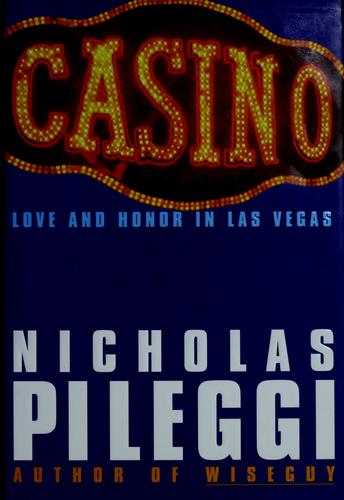
Casino: Love and Honor in Las Vegas
Nicholas Pileggi’s definitive 1995 investigative account built directly from Frank Rosenthal interviews, Frank Cullotta confessions, and FBI Operation Strawman wiretaps.
View Hardcover on Amazon ↗
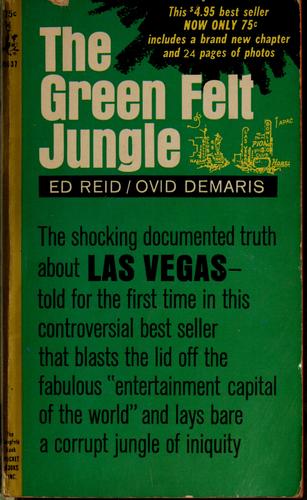
The Green Felt Jungle
Traces the pre-Argent syndicate roots and Teamsters Central States Pension Fund lending pipeline that turned Strip count rooms into Midwest mob ATMs.
View Hardcover on Amazon ↗
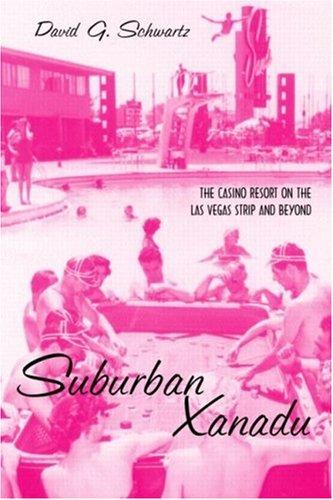
Suburban Xanadu: The Casino Resort on the Las Vegas Strip and Beyond
Contextualizes how the 1979–1985 federal Strawman prosecutions cleared the last hidden syndicate operators so Wall Street corporations could finance 1990s megaresorts.
View Hardcover on Amazon ↗
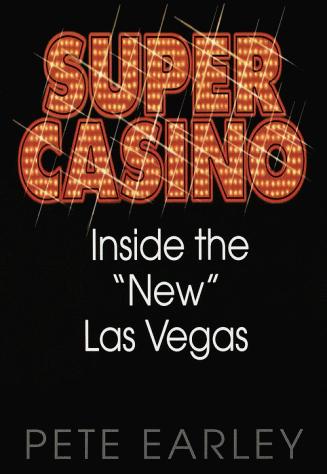
Super Casino: Inside the 'New' Las Vegas
Contrasts the old skim-era Stardust and Hacienda grind model against the publicly traded corporate resort machine that succeeded it.
View Hardcover on Amazon ↗
1958–2007 • Strip Icons
5 Photos
South Strip Aviation & Neon Era • 1956–1996
5 Photos

Hacienda Hotel Las Vegas History: 64-Day Flight & Implosion
Read Article →
1955–2016 • Strip Icons
5 Photos

Riviera Hotel & Casino Las Vegas History (1955–2016)
Read Article →
1989–2024 • Megaresort Era
5 Photos

The Mirage Las Vegas History (1989–2024): Volcano to Hard Rock
Read Article →
