Las Vegas Casino Implosions Timeline: Every Blast (1993–2024)
Read Article →
Tropicana Las Vegas History (1957–2024): From the 'Tiffany of the Strip' & Costello Note to the 2024 Implosion
The Tropicana Resort and Casino opened on April 4, 1957, at 3801 Las Vegas Boulevard South on a 40-acre south Strip parcel developed for a record $15 million by Miami Fontainebleau co-owner Ben Jaffe and New Orleans slot-machine distributor Philip "Dandy Phil" Kastel to a Tropical Modernist design by architect M. Tony Sherman. Revered for 67 years as the "Tiffany of the Strip" for its 60-foot Tulip Fountain, 49-year Folies Bergere revue, and 4,000-square-foot stained-glass casino dome, the Tropicana closed on April 2, 2024, and collapsed in a drone-lit implosion on October 9, 2024, to clear the planned Major League Baseball Athletics stadium site.
Few casinos in American history bracketed the rise and fall of classic Las Vegas as completely as the "Trop." Just twenty-eight days after its gala debut, a bullet fired at Mafia boss Frank Costello in a Manhattan apartment lobby exposed hidden underworld profits inside its count room; nearly seven decades later, 555 synchronized pyrodrones lit up the Mojave sky as its twin towers came down.

Architect M. Tony Sherman's signed 1955 presentation rendering of the Tropicana Resort and Casino, showcasing the sweeping Y-shaped lanai room wings and 60-foot roadside Tulip Fountain.
In This Article • 5 Archival Photographs
Click any photo to view full size
Archival Landmark Dossier
Street Address
3801 Las Vegas Boulevard South, Paradise, NV 89109
Opening Date
April 4, 1957 ($15 million cost; 300 rooms in 3 Y-wings)
Original Architect
M. Tony Sherman (Miami Tropical Modernism; 60-ft Tulip Fountain)
Signature Landmarks
Folies Bergere (1959–2009) & 4,000-sq-ft leaded stained-glass ceiling
Closed & Imploded
Closed April 2, 2024; imploded October 9, 2024 at 2:30 a.m. (2,200 lbs explosives)
Planned Site Future
Major League Baseball Athletics 33,000-seat domed ballpark
Why Was the 1957 Tropicana Nicknamed the "Tiffany of the Strip" by Architect M. Tony Sherman?
Fresh off opening Morris Lapidus's curving Fontainebleau Hotel in Miami Beach in late 1954, Chicago-born executive Ben Jaffe sold his Florida equity in 1955 and paid roughly $180,000 through Bond Estates for 40 sun-baked acres at the southeast corner of Highway 91 and Bond Road, shortly renamed Tropicana Avenue. To equip and lease the gaming floor through operating entity Hotel Conquistador Inc., Jaffe partnered with impeccably tailored New Orleans slot-machine kingpin Philip "Dandy Phil" Kastel, a longtime lieutenant of New York crime boss Frank Costello and Louisiana politician Huey Long. Early grading and steel work by Miami's Taylor Construction appear in the Tropicana archival photograph collection.
Hiring Florida resort designer M. Tony Sherman, Jaffe and Kastel poured an unprecedented $15 million into construction, nearly triple the cost of the Sands or Dunes, earning instant press acclaim as the "Tiffany of the Strip." Sherman arranged 300 deluxe rooms across three three-story Y-shaped wings wrapped in private lanai balconies with woven aluminum railings, surrounding a boomerang swimming pool, cascading waterfalls, and manicured tropical gardens.
Inside, Italian marble columns, hand-rubbed Brazilian mahogany walls, and Waterford crystal chandeliers framed a refined Monte Carlo-style casino and the Theatre Restaurant, where Eddie Fisher headlined opening night on April 4, 1957. Along the Highway 91 driveway stood Sherman's signature landmark: a 60-foot-tall sculptural concrete Tulip Fountain inlaid with Venetian glass tile and colored underwater spotlights.

Renderings of the Tropicana signed by the hotel’s designer M. Tony Sherman and dated 1955.
How Did the May 2, 1957 Frank Costello Assassination Slip Expose Mob Ownership at the Tropicana?
Nevada regulators had already eyed Phil Kastel suspiciously before opening night, yet hard documentary proof of East Coast syndicate skimming materialized 2,500 miles away in Manhattan less than four weeks later. At approximately 11:00 p.m. on May 2, 1957, Luciano-family boss Frank Costello, known nationwide since the televised 1951 Kefauver hearings as the "Prime Minister of the Underworld", walked into the vestibule of the Majestic Apartments at 115 Central Park West. Rival boss Vito Genovese's 29-year-old driver and gunman, Vincent "The Chin" Gigante, called out, "This is for you, Frank," firing a .38-caliber bullet that grazed the right side of Costello's scalp as Costello turned his head.
While emergency physicians treated Costello's flesh wound at Roosevelt Hospital, New York Police Department detectives cataloged the contents of his blood-stained suit coat. Tucked inside his pocket sat a folded, handwritten accounting memo reading: "Gross casino wins as of 4/26/57 ... $651,284," followed by itemized cash disbursements for "casino costs," "Phil" (Phil Kastel), and "L.L." (widely identified by investigators as Meyer Lansky lieutenant Lou Lederer).
Subpoenaed audits by Nevada tax authorities stunned Carson City: $651,284 matched the Tropicana's exact gross gaming win through April 26, 1957, down to the last dollar, proving hidden couriers were transmitting daily Tropicana count-room tallies straight to Costello in New York. Kastel was forced off the Tropicana license, Jaffe leased operations to clean-record hotelier J. Kell Houssels, and the scandal spurred Governor Grant Sawyer and the Nevada Legislature to establish the modern Nevada Gaming Commission in 1959 alongside the state's List of Excluded Persons (the "Black Book").

Construction of the Tropicana, Las Vegas, 1955-1957 Tropicana began when Ben Jaffe (Bond Estates), a partner in Miami’s Fontainebleau hotel, bought the 40 acre site in 1955. Lessor of the property Hotel Conquistador Inc, owned by Phil Kastel, led the construction.
How Did Folies Bergere Become the Longest-Running Showgirl Revue in Las Vegas History (1959–2009)?
Seeing Donn Arden's Lido de Paris pack the Stardust every evening after July 1958, Tropicana entertainment director Lou Walters, founder of Manhattan's Latin Quarter nightclub and father of broadcast journalist Barbara Walters, flew to Paris to negotiate directly with impresario Paul Derval for exclusive North American rights to the world's oldest music-hall brand, founded in 1869. Opening inside the Tropicana's 550-seat Fountain Theatre on Christmas Eve, December 24, 1959, Les Folies Bergere combined topless plumed showgirls, elaborate turn-of-the-century Parisian street sets, specialty novelty jugglers and adagio acrobats, and a high-energy French can-can finale.
Directed and choreographed for more than three decades starting in 1966 by Jerry Jackson, the production weathered changing musical eras from Rat Pack swing to 1990s cirque acrobatics without abandoning its signature three-foot rhinestone-and-ostrich-feather headpieces, establishing the definitive visual archetype of the Golden Age Las Vegas showgirl.
Over nearly five decades, more than 14 million guests attended Folies Bergere before declining mid-tier showroom economics led Tropicana management to lower the final curtain on March 28, 2009, concluding an unmatched 49-year, three-month continuous run as the longest-running production show in Las Vegas Strip history.

Construction of the Tropicana, Las Vegas, 1955-1957 Tropicana began when Ben Jaffe (Bond Estates), a partner in Miami’s Fontainebleau hotel, bought the 40 acre site in 1955. Lessor of the property Hotel Conquistador Inc, owned by Phil Kastel, led the construction.
When Were the Stained-Glass Ceiling and High-Rise Towers Added, and How Did Operation Strawman Unfold?
During the 1970s, controlling interest in the Tropicana passed to chemical-fortune heiress Mitzi Stauffer Briggs, who funded an ambitious vertical expansion completed in 1979: the 22-story, 600-room Tiffany Tower (later renamed the Paradise Tower) paired with a sweeping, 4,000-square-foot barrel-vaulted ceiling of opal, amber, and emerald leaded stained glass arching directly above the main blackjack and craps pits. Yet behind Briggs's well-intentioned ownership, organized crime had quietly infiltrated the back office a second time.
Under an FBI court-authorized wiretap investigation code-named "Operation Strawman" (1978–1980), federal agents listened as Tropicana entertainment director Joseph Agosto, a charismatic Italian-born impresario originally hired to produce Folies Bergere, conspired with Kansas City crime boss Nick Civella, Carl "Cork" Civella, and Chicago/Milwaukee syndicate leaders to skim roughly $40,000 per month directly out of Tropicana cashier cages and count rooms. Pressured by regulators, Briggs sold the Tropicana to Ramada Inns in late 1979, while Agosto turned federal witness prior to the 1983 Kansas City convictions that permanently broke Mafia control across Strip count rooms.
In 1986, Ramada invested $70 million rebranding the property as "The Island of Las Vegas," erecting the 21-story, 806-room Island Tower (later the Club Tower) behind a five-acre tropical waterpark with toucans, flamingos, waterfalls, and Las Vegas's most famous swim-up blackjack tables, shortly before Kirk Kerkorian built the emerald-glass modern counterpart to his original MGM Grand directly across Las Vegas Boulevard in 1993.

Construction of the Tropicana, Las Vegas, 1955-1957 Tropicana began when Ben Jaffe (Bond Estates), a partner in Miami’s Fontainebleau hotel, bought the 40 acre site in 1955. The contractor Taylor Construction, from Miami, also built the Riviera.
Why Did Bally's and GLPI Close the Tropicana on April 2, 2024 After 67 Years?
Ramada spun off its gaming division as Aztar Corporation in 1989, operating the Tropicana until Columbia Sussex bought Aztar at the peak of the 2006 real-estate bubble, only to collapse into Chapter 11 bankruptcy in 2008 before demolishing the classic 1957 wings as planned. Private-equity buyer Onex Corporation spent $200 million between 2009 and 2011 stripping away the dark Polynesian wood in favor of bright white South Beach stucco, before selling to Penn National Gaming for $360 million in 2015. During the 2020 COVID-19 shutdown, real-estate investment trust Gaming and Leisure Properties, Inc. (GLPI) acquired the underlying 35-acre land parcel, leasing casino operations to Bally's Corporation in September 2022.
Situated at the booming south Strip crossroads beside T-Mobile Arena, Allegiant Stadium, MGM Grand, New York-New York, and Excalibur, the 35-acre Tropicana corner was worth far more cleared than operating as a mid-century 1,470-room hotel. In May 2023, Bally's and GLPI signed a binding agreement gifting nine acres of the site for a $1.5 billion (later updated toward $1.75 billion) domed Major League Baseball stadium for the relocating Oakland Athletics, supported by $380 million in public tax-credit and bond financing approved under Nevada Senate Bill 1 in June 2023.
Two days shy of its 67th anniversary, at 12:00 p.m. on Tuesday, April 2, 2024, security guards padlocked the Tropicana's glass doors as emotional 30- and 40-year dealers hugged patrons along Tropicana Avenue.
How Was the Tropicana Imploded on October 9, 2024 for the MLB Athletics Stadium?
Across summer 2024, salvage crews carefully removed historical neon signage for the Neon Museum and dismantled panels of the 1979 4,000-square-foot Tiffany stained-glass ceiling while environmental engineers abated asbestos and stripped the 1957 low-rise wings down to bare concrete frames. For the final demolition of the 22-story Paradise Tower and 21-story Club Tower, marking the first explosive Strip casino demolition in more than eight years within the Las Vegas Strip implosions timeline, Bally's hired Maryland-based Controlled Demolition, Inc. alongside Fireworks by Grucci.
At 2:30 a.m. PDT on Wednesday, October 9, 2024, following tributes from Bally's chairman Soo Kim and Athletics executives, 555 illuminated drones and pyrodrones ascended above the dark towers, forming giant glowing dice, a swinging baseball batter, the vintage Tropicana script logo, and a giant hand pressing a TNT plunger in the night sky.
Seconds later, 2,200 pounds of high-velocity explosives packed into 2,190 drilled boreholes detonated in staggered millisecond sequences. Within 22 seconds, the steel-framed Club Tower and concrete-framed Paradise Tower folded inward onto the 35-acre footprint, leaving only the 1946 Flamingo and 1952 Sahara standing elsewhere along the boulevard as survivors of the pre-1960 Strip.
| Date | Tropicana Las Vegas Milestone | Key Figures & Historical Specs |
|---|---|---|
| April 4, 1957 | Tropicana opens at 3801 Las Vegas Blvd S | Ben Jaffe & Phil Kastel; $15M cost; 300 rooms by M. Tony Sherman; Tulip Fountain |
| May 2, 1957 | Frank Costello shot in NYC; $651,284 slip discovered | Vincent Gigante shooting exposes exact Tropicana 24-day win in Costello's coat |
| Dec 24, 1959 – Mar 28, 2009 | Folies Bergere runs continuously for 49 years | Imported from Paris by Lou Walters; longest-running showgirl revue in LV history |
| 1978 – 1983 | 1979 Tiffany Tower & stained glass; Operation Strawman | 22-story tower & 4,000-sq-ft glass dome; FBI exposes Joseph Agosto / KC mob skim |
| 1986 | Ramada opens $70M "Island of Las Vegas" expansion | 21-story Island (Club) Tower, 5-acre lagoon & swim-up blackjack tables |
| 2011 – Sept 2022 | South Beach remodel; GLPI & Bally's take control | $200M Onex renovation; GLPI buys 35-acre land parcel; Bally's assumes operations |
| May – June 2023 | MLB Athletics stadium site agreement & Nevada SB1 | 9 acres committed for 33,000-seat domed ballpark with $380M public package |
| Apr 2 & Oct 9, 2024 | Noon permanent closure and 2:30 a.m. twin-tower implosion | 555 Grucci drones + 2,200 lbs CDI explosives drop both towers in 22 seconds |
Frequently Asked Questions
What happened to the Tropicana's 4,000-square-foot stained-glass ceiling?
Prior to the October 9, 2024 implosion, demolition contractors and preservation specialists carefully disassembled intact panels of the 1979 4,000-square-foot Tiffany-style leaded stained-glass casino ceiling for archival storage and potential reuse or museum display, while Tropicana exterior neon letters and memorabilia were donated to The Neon Museum and UNLV Special Collections.
Did James Bond stay at the Tropicana in Diamonds Are Forever (1971)?
Yes. In the 1971 James Bond film Diamonds Are Forever, Sean Connery's Agent 007 remarks, "I hear that the Hotel Tropicana is quite comfortable," and checks into a Tropicana suite while investigating Willard Whyte's empire. The Tropicana also appeared in Viva Las Vegas (1964) and The Godfather Part II's fictionalized Senate scenes.
What did the note in Frank Costello's pocket on May 2, 1957 actually say?
Following Vincent Gigante's May 2, 1957 assassination attempt in Manhattan, NYPD detectives found a handwritten slip in Frank Costello's coat pocket reading "Gross casino wins as of 4/26/57 ... $651,284" alongside share breakdowns for "Phil" (Phil Kastel) and "L.L." (Lou Lederer), matching the Tropicana's exact opening 24-day win to the dollar.
What is replacing the Tropicana Las Vegas after the October 2024 implosion?
Nine acres of the 35-acre former Tropicana site at 3801 Las Vegas Boulevard South are slated for a $1.75 billion, 33,000-seat enclosed Major League Baseball stadium designed by Bjarke Ingels Group (BIG) and HNTB for the relocating Athletics, while landowners GLPI and Bally's Corporation plan an integrated resort development on the remaining acreage.
Curated Historical Bibliography
Recommended Las Vegas History Books
Recommended historical books and architectural studies covering this landmark. As an Amazon Associate, LasVegasArchive.com earns from qualifying purchases.
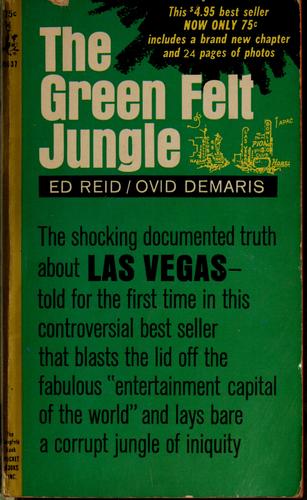
The Green Felt Jungle
Investigates Phil Kastel, Ben Jaffe, and the May 2, 1957 Frank Costello $651,284 pocket slip that rocked the newborn Tropicana.
View Hardcover on Amazon ↗
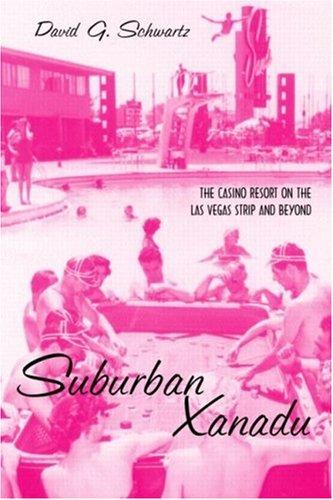
Suburban Xanadu: The Casino Resort on the Las Vegas Strip and Beyond
Places M. Tony Sherman's $15 million 1957 Tropical Modernist resort and Folies Bergere inside the evolution of Strip tourism.
View Hardcover on Amazon ↗
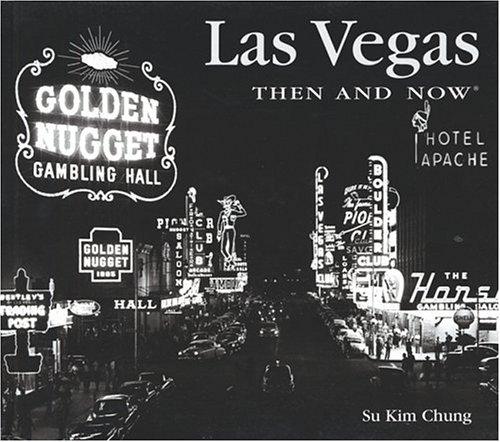
Las Vegas Then and Now
Contrasts archival south Strip photographs at Tropicana Avenue against the modern megaresort intersection.
View Hardcover on Amazon ↗
1993–2024 • Strip Megaresort Era
5 Photos

1944–1986 • Casino Showrooms
5 Photos

Liberace Las Vegas Showrooms: 1944–1986 Golden Age History
Read Article →
1973–Present • Strip Megaresorts
5 Photos

Original 1973 MGM Grand Las Vegas: History, 1980 Fire & Bally's
Read Article →
1958–2007 • Strip Icons
5 Photos

Stardust Hotel & Casino Las Vegas History (1958–2007)
Read Article →
