Desert Inn Las Vegas History: Wilbur Clark & Howard Hughes
Read Article →
Silver Slipper & Thunderbird Hotel History: Neon, Howard Hughes & Early Highway 91
Two neighboring mid-century properties along North Highway 91 shaped modern casino regulation and Strip folklore out of all proportion to their square footage: the Hotel Thunderbird, opened on September 2, 1948 at 2755 Las Vegas Boulevard South by builder Marion Hicks and Nevada Lieutenant Governor Clifford A. Jones (later renamed Silverbird and El Rancho before its October 3, 2000 implosion), and the Silver Slipper Gambling Hall, opened in late summer 1950 at 3100 Las Vegas Boulevard South by Last Frontier architect William J. "Bill" Moore and demolished in November 1988.
Separated by barely half a mile of desert asphalt, the two casinos triggered the creation of the Nevada Gaming Control Board in 1955, suffered a notorious state raid for shaved craps dice in 1964, and drove billionaire recluse Howard Hughes to spend $5.4 million in April 1968 just to unplug a 13-foot revolving high-heeled shoe he suspected of hiding cameras aimed at his Desert Inn penthouse.

October 1954 view of the Silver Slipper era on Highway 91, opened in 1950 on the front grounds of the Last Frontier Village beneath YESCO's revolving jeweled slipper.
In This Article • 5 Archival Photographs
Click any photo to view full size
Archival Landmark Dossier
Hotel Thunderbird
Opened Sept 2, 1948 at 2755 Las Vegas Blvd. S.; imploded Oct 3, 2000
Thunderbird Founders
Contractor Marion Hicks & Nevada Lt. Gov. Clifford A. Jones
1955 Regulatory Trigger
Concealed $160,000 Jake Lansky loan spurred Nevada Gaming Control Board
Silver Slipper
Opened Sept 1950 at 3100 Las Vegas Blvd. S.; demolished Nov 1988
Hughes Acquisition
Bought by Howard Hughes in April 1968 for $5.4M to halt rotating slipper
Surviving Artifact
Original 13-ft YESCO Silver Slipper sign restored on Las Vegas Blvd. N. (2009)
How Did Marion Hicks and Lt. Gov. Cliff Jones Build the 1948 Hotel Thunderbird?
On March 11, 1946, general contractor Marion B. Hicks, who had built San Diego's El Cortez extensions and moved to Nevada during the wartime construction boom, joined powerful Democratic kingmaker and Nevada Lieutenant Governor Clifford A. Jones to purchase a North Strip tract from Guy McAfee, Art Ham, and J. Kell Houssels for roughly $85,000. Initially proposed as the Nevada Ambassador, the project pivoted to a Southwestern Pueblo and Navajo motif after Hicks chose the mythical sacred bird of desert rainstorms as its emblem.
Opening on September 2, 1948 as the fourth full resort on US Highway 91, following El Rancho Vegas (1941), Hotel Last Frontier (1942), and the Flamingo (1946), the $2.2 million Thunderbird featured 79 low-slung air-conditioned rooms, rustic stone-and-timber interiors, the Navajo Room showroom (where Rosemary Clooney and Eartha Kitt built early Strip followings), and a towering blue-and-red neon Thunderbird roadside pylon that greeted motorists arriving from Salt Lake City.

Las Vegas c. October 1954.
How Did Jake Lansky's Secret $160,000 Thunderbird Loan Spark the 1955 Gaming Control Board?
Postwar materials shortages and tight bank credit pushed Marion Hicks into a fateful private financing deal while finishing the Thunderbird in 1947–1948. Through casino pit boss George Sadlo, Hicks quietly accepted a $160,000 construction loan supplied by Florida syndicate boss Jake Lansky, brother and operational lieutenant of national underworld financier Meyer Lansky, in exchange for undisclosed beneficial equity slices that never appeared on Hicks and Jones's sworn Nevada Tax Commission license filings.
In 1954, Las Vegas Sun publisher Hank Greenspun hired undercover investigative reporter Pierre Salinger (future press secretary to President John F. Kennedy) and exposed the concealed Lansky interest across front-page headlines. Embarrassed before federal Kefauver-era critics who were threatening a punitive federal tax on legal Nevada wagering, Governor Charles Russell and the Nevada Legislature acted in 1955 to create the professionalized, full-time Nevada Gaming Control Board as an investigative enforcement arm inside the Tax Commission.
The Control Board's very first high-profile disciplinary action suspended the Thunderbird's license until Lansky-linked interests were purged. Although the Nevada Supreme Court partially modified the revocation order in 1957 on evidentiary grounds, Clifford Jones resigned his public political posts, and the Thunderbird affair permanently established the principle that hidden underworld creditors invalidated a Nevada gaming license.

Thunderbird / Silverbird / El Rancho Thunderbird Hotel, 1948 Thunderbird, ‘48-'76 '46: Marion Hicks and Lt. Cliff Jones purchase property for a planned Nevada Ambassador hotel on 3/11/46.
Why Did the 1950 Golden Slipper Rename Itself the Silver Slipper and Draw a 1964 State Raid?
Half a mile south at 3100 Las Vegas Boulevard South, architect Bill Moore (nephew of Last Frontier founder R.E. Griffith) had assembled the authentic Old West ghost-town buildings of the Last Frontier Village along the highway frontage of the Last Frontier Hotel. In late summer 1950, Moore teamed with Downtown operator Jackie Gaughan and publicist Hank Greenspun to open a standalone two-story saloon and gambling hall at the edge of the village called the Golden Slipper, designed with input from architect Martin Stern Jr.
Downtown's Golden Nugget immediately filed suit for unfair competition, arguing that "Golden" confused tourists into thinking McAfee's Fremont Street powerhouse backed the Highway 91 club. Rather than fight a protracted injunction, and after buying out the name rights from a tiny pre-existing local tavern, Moore rebranded the building in November 1950 as the Silver Slipper Gambling Hall and Saloon. YESCO fabricated its signature rooftop beacon: a 13-foot-long, three-dimensional high-heeled slipper encrusted in mirrored glass mosaic and outlined by nearly 1,000 clear, pink, and blue incandescent bulbs, rotating continuously above the Strip.
Upstairs inside the intimate Minsky-style burlesque theater, legendary fan dancer Sally Rand, exotic headliners like Jacqueline Fontaine, and gravel-voiced slapstick comic Hank Henry, whose roaring catchphrase "It's Silver Slipper Time!" echoed over local late-night television, packed crowds for low-minimum blackjack and dime slots. Yet scandal struck on April 14, 1964, when Nevada Gaming Control Board agents stormed the Silver Slipper pit, confiscated altered "flat" (shaved) craps dice and doctored roulette equipment, padlocked the tables, and forced longtime lessee Wesley "Tex" Whitson out of Nevada gaming.

Thunderbird / Silverbird / El Rancho Thunderbird Hotel, 1948 Thunderbird, ‘48-'76 '46: Marion Hicks and Lt. Cliff Jones purchase property for a planned Nevada Ambassador hotel on 3/11/46.
Why Did Howard Hughes Pay $5.4 Million in April 1968 Just to Stop the Revolving Neon Slipper?
Directly across Highway 91 from the Silver Slipper stood Wilbur Clark's Desert Inn, where billionaire aviator Howard Hughes had barricaded himself behind blackout curtains on the ninth-floor penthouse since Thanksgiving 1966. Already controlling the Desert Inn, Sands, Frontier, and Castaways, Hughes fixated during sleepless nights in early 1968 on the Silver Slipper's 13-foot rotating shoe directly outside his west-facing windows.
In handwritten yellow-pad memos to chief Nevada lieutenant Robert Maheu, Hughes insisted two things plagued him: first, the rhythmic strobe of the rotating jeweled heel bled through gaps in his penthouse drapes; second, and far darker, Hughes became convinced that CIA operatives or syndicate spies had secretly mounted telescopic surveillance cameras inside the hollow toe of the slipper so the lens swept across his penthouse every time the shoe completed a rotation.
When Silver Slipper owners refused Maheu's requests to switch off their best roadside advertisement, Hughes took the direct billionaire route: in April 1968, Summa Corporation bought the tiny, hotel-less Silver Slipper outright for $5.4 million. Within hours of closing, Hughes's engineers climbed onto the roof, welded and disconnected the rotation motor, inspected the empty sheet-metal toe, and sealed the cavity shut.

Las Vegas c. Jacqueline Fontaine on the board at the Silver Slipper.
What Happened to the Silver Slipper (1988) and Thunderbird / El Rancho (2000)?
Both Highway 91 pioneers vanished during the Strip's shift from low-rise gambling halls to 3,000-room megaresorts, though one left behind a museum centerpiece and the other a 23-year high-rise saga.
| Year | Property | Ownership / Name Transition & Historical Outcome |
|---|---|---|
| 1948 (Sept 2) | Hotel Thunderbird | Marion Hicks & Cliff Jones open 79-room Southwestern resort at 2755 Las Vegas Blvd. South. |
| 1950 (Aug–Nov) | Silver Slipper | Bill Moore opens Golden Slipper at 3100 Las Vegas Blvd. S.; renames to Silver Slipper Nov 1950 after Golden Nugget lawsuit. |
| 1955–1964 | Thunderbird & Slipper | Jake Lansky loan exposure births Gaming Control Board (1955); Control Board raids Silver Slipper for shaved dice (April 1964). |
| 1964–1976 | Hotel Thunderbird | Sold to Del E. Webb Corp. (Dec 1964), expanding to 500+ rooms; acquired by Caesars World in 1972 for $13.5M. |
| 1968 (April) | Silver Slipper | Howard Hughes buys casino for $5.4M, freezes revolving 13-foot YESCO slipper, and seals its toe. |
| 1977–1992 | Silverbird / El Rancho | Dunes boss Major Riddle renames Thunderbird 'Silverbird' (1977); Ed Torres rebrands it 'El Rancho' (1982) until closing July 1992. |
| 1988 (Nov) | Silver Slipper | Bought by Frontier owner Margaret Elardi for $70M (with Frontier); Slipper bulldozed Nov 1988 for surface parking; sign saved for 2009 Neon Museum restoration. |
| 2000 (Oct 3) | El Rancho (Thunderbird) | Shuttered 8 years; imploded at 2:30 a.m. by CDI for Turnberry; 67-story Fontainebleau Las Vegas finally opens on parcel Dec 13, 2023. |
Summa Corporation sold the Frontier and adjacent Silver Slipper in early 1988 to Margaret Elardi, who shut the Silver Slipper on November 28, 1988 and bulldozed the two-story building for Frontier surface parking (a parcel that still sits vacant opposite Resorts World following the New Frontier's 2007 implosion). Fortunately, Elardi donated the 13-foot YESCO slipper to preservationists; after painstaking bulb-by-bulb steel and neon restoration by YESCO craftsmen, the glowing Silver Slipper was relit in September 2009 atop the Las Vegas Boulevard North median outside the Neon Museum.
Up at 2755 Las Vegas Boulevard South, Del Webb (1964) and Caesars World (1972) sold the Thunderbird to Dunes veteran Major Riddle, who renamed it the Silverbird in 1977 before Riviera investor Ed Torres remodeled the facade into a country-western motif and resurrected the historic name El Rancho Hotel & Casino in 1982 (unrelated to Thomas Hull's 1941 El Rancho Vegas up at Sahara Avenue). Shuttered in July 1992, the rotting 13-story tower stood boarded up for eight years until Turnberry Associates imploded it with 700 pounds of dynamite on October 3, 2000, clearing the 24.5-acre North Strip site where Jeffrey Soffer's stalled 67-story Fontainebleau Las Vegas finally opened on December 13, 2023.
Frequently Asked Questions
Where can you see the original Silver Slipper neon sign in Las Vegas today?
The original 13-foot-long, 1950 YESCO Silver Slipper rooftop sign stands fully lit outdoors on the landscaped median of Las Vegas Boulevard North near Bonanza Road, directly south of the Neon Museum's La Concha Visitors' Center. Saved from the scrapyard when Margaret Elardi demolished the Silver Slipper building in November 1988, the sign underwent a complete structural and electrical restoration by YESCO using nearly 1,000 colored and clear incandescent bulbs before its public relighting in September 2009.
Was the 1980s El Rancho Hotel & Casino the same place as the original 1941 El Rancho Vegas?
No. Thomas Hull's original 1941 El Rancho Vegas stood at the southwest corner of Highway 91 and Sahara Avenue (2500 Las Vegas Boulevard South) until its main casino burned down on June 17, 1960. The 1982–1992 El Rancho Hotel & Casino stood quarter-mile south on the opposite (east) side of the Strip at 2755 Las Vegas Boulevard South inside the renamed 1948 Hotel Thunderbird / 1977 Silverbird property before imploding on October 3, 2000.
Did Howard Hughes find any spy cameras inside the Silver Slipper sign in 1968?
No cameras or surveillance gear were ever found. After Howard Hughes's Summa Corporation paid $5.4 million to buy the Silver Slipper in April 1968, Hughes dispatched security engineers onto the casino roof to shut off the rotation mechanism and inspect the interior of the 13-foot metal slipper facing his ninth-floor Desert Inn penthouse. Finding nothing inside the hollow toe, workers welded and sealed the access panels to appease the reclusive billionaire.
What occupies the former Thunderbird and Silver Slipper sites on the Strip today?
The former Hotel Thunderbird / Silverbird / El Rancho parcel at 2755 Las Vegas Boulevard South is now occupied by the 67-story, 3,644-room Fontainebleau Las Vegas luxury resort, which broke ground in 2007 and opened on December 13, 2023 after sixteen years of ownership changes. The former Silver Slipper footprint at 3100 Las Vegas Boulevard South, just north of Fashion Show Mall, remains part of the cleared 25-acre New Frontier land parcel.
Curated Historical Bibliography
Recommended Las Vegas History Books
Recommended historical books and architectural studies covering this landmark. As an Amazon Associate, LasVegasArchive.com earns from qualifying purchases.
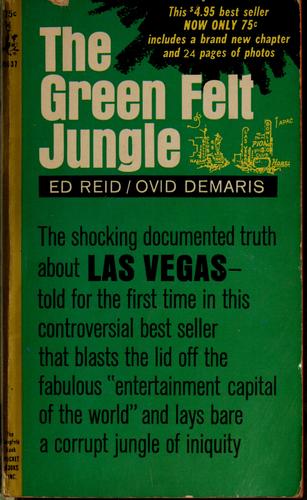
The Green Felt Jungle
Exposes the 1954–1955 Jake Lansky hidden loan scandal at Marion Hicks and Cliff Jones's Thunderbird Hotel in contemporary investigative detail.
View Hardcover on Amazon ↗
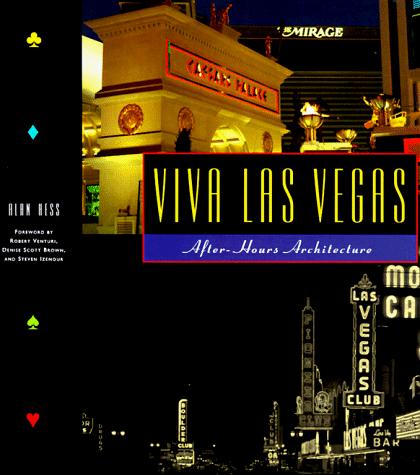
Viva Las Vegas: After-Hours Architecture
Analyzes how YESCO's revolving 13-foot Silver Slipper and highway pylons turned North Highway 91 into kinetic commercial sculpture.
View Hardcover on Amazon ↗
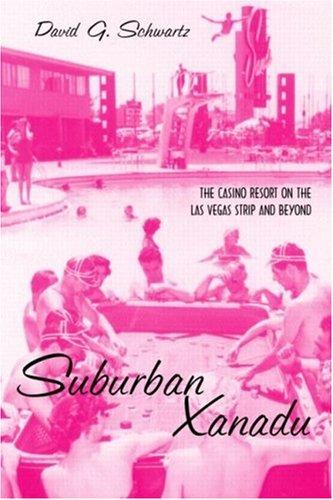
Suburban Xanadu: The Casino Resort on the Las Vegas Strip and Beyond
Places both the 1948 Thunderbird and 1950 Silver Slipper in the context of Nevada's shift from mob-backed partnerships to Howard Hughes's corporate era.
View Hardcover on Amazon ↗
1950–2001 • Classic Strip & Hughes Era
5 Photos

Highway 91 & Strip History • 1942–2007
5 Photos

Hotel Last Frontier Las Vegas History: New Frontier & Strike
Read Article →
1941–1960 • Highway 91 Pioneers
5 Photos

El Rancho Vegas History: First Strip Resort (1941–1960)
Read Article →
1945–1993 • Luxury Strip Origins
5 Photos

Flamingo Las Vegas History: Billy Wilkerson & Bugsy Siegel
Read Article →
