Hotel Last Frontier Las Vegas History: New Frontier & Strike
Read Article →
El Rancho Vegas History: Thomas Hull's 1941 Highway 91 Resort, the Buckaroo Buffet, and the 1960 Fire
El Rancho Vegas opened on April 3, 1941, at 2500 Las Vegas Boulevard South, the southwest corner of US Highway 91 and San Francisco Avenue (now Sahara Avenue), as the very first full-service casino resort on what became the Las Vegas Strip, built by California hotelier Thomas E. Hull and designed by Los Angeles architect Wayne McAllister before a pre-dawn fire burned its main lodge to the ground on June 17, 1960. Sited deliberately outside Las Vegas city limits in unincorporated Clark County, the 63-bungalow oasis replaced vertical downtown brick gambling halls with lawn-lined motor courts, a roadside swimming pool, and a rotating neon windmill.
Over nineteen influential years under Hull, Wilbur Clark, Sanford "Sandy" Adler, and Beldon Katleman, El Rancho Vegas wrote the operational playbook for postwar Strip hospitality. It proved Southern California motorists would stop two miles south of Fremont Street, invented the all-you-can-eat $1 midnight Buckaroo Buffet circa 1946 to keep gamblers at the tables past midnight, and hosted Paul Newman and Joanne Woodward's 1958 wedding before perishing in flames.

Arthur Nager's 1941 photograph of El Rancho Vegas rising at US Highway 91 and San Francisco Avenue (Sahara Avenue), inaugurating the suburban resort corridor later named the Las Vegas Strip.
In This Article • 5 Archival Photographs
Click any photo to view full size
Archival Landmark Dossier
Street Address
2500 Las Vegas Boulevard South (SW corner of US Hwy 91 & Sahara Ave)
Opening Date & Cost
April 3, 1941 • $500,000 (1st full resort on the Las Vegas Strip)
Founder & Architect
Thomas E. Hull (Hull Hotels) • Wayne McAllister (architect)
Initial Layout
63 Spanish Mission bungalows, neon windmill, 4 gaming tables & 70 slots
Culinary Invention
Las Vegas's first $1 midnight "Buckaroo Buffet" (Herb McDonald, c. 1946)
Destruction & Site Today
Main lodge destroyed by fire June 17, 1960; now LV Festival Grounds & Hilton Grand Vacations
Why Did Thomas Hull Build El Rancho Vegas Outside Las Vegas City Limits on Highway 91?
For decades, Las Vegas guidebooks repeated an apocryphal fable, first popularized in a May 1961 newspaper retrospective, claiming California hotelier Thomas E. Hull suffered a flat tire on the Los Angeles highway outside town, spent an afternoon counting hundreds of out-of-state cars roaring past, and decided on the spot to build a desert hotel. Contemporary 1939–1940 records show a far more calculated real-estate pitch: downtown boosters James "Big Jim" Cashman, Bob Griffith, and Bryan Bunker actively courted Hull after admiring his thriving El Rancho motor-court hotels in Fresno and West Sacramento.
In late 1939 and 1940, Hull's corporation acquired roughly 57 to 66 acres of desert scrub from the estate of Leigh S.J. Hunt (Vegas Valley Development Company) for between $5,000 and $15,000, approximately $150 per acre. Readers can inspect the raw desert parcel and framing stages in the El Rancho Vegas archival photo collection.
Hull picked the southwest corner of US Highway 91 and San Francisco Avenue (renamed Sahara Avenue in the 1950s) because San Francisco Avenue marked the exact southern municipal boundary of the City of Las Vegas. Stepping fifty feet south into unincorporated Clark County freed El Rancho Vegas from city property taxes, strict municipal gaming table levies, downtown political bosses, and Fremont Street's chronic lack of curb parking for tourists driving up from Southern California and Hoover Dam.

El Rancho Vegas, 1941-1960 Construction of El Rancho Vegas c. First resort on US 91 just outside the Las Vegas city limits, the future Las Vegas Strip.
How Did Architect Wayne McAllister Design the April 3, 1941 Resort for Motorists?
To translate the automobile motel into a self-contained casino resort on a $500,000 budget, Hull turned to his trusted 33-year-old Los Angeles architect Wayne McAllister, who had already helped design Tijuana's glamorous Agua Caliente Resort, shaped Hull's California El Ranchos, created Burbank's streamlined Bob's Big Boy drive-in, and would later design the 1952 Sands Hotel. McAllister understood that motorists crossing 280 miles of Mojave glare responded to horizontal oasis cues rather than cramped brick facades.
McAllister placed a sprawling turquoise swimming pool and emerald Bermuda-grass lawns right against the shoulder of two-lane US Highway 91, ensuring dusty drivers heading north from Los Angeles saw sunbathers and waterfalls before reaching downtown. Behind the main Mission Revival stucco-and-timber lodge, crowned by a towering wooden windmill outlined in cascading green-and-gold neon tubing with the slogan "Stop at the Sign of the Windmill", curved driveways led directly to 63 air-conditioned Spanish-Western bungalows with private carports.
When El Rancho Vegas opened on Thursday, April 3, 1941, dining and hospitality dwarfed gambling in floor space. While the Round-Up Room steakhouse and theater-restaurant seated 250 guests beneath wagon-wheel chandeliers and cowboy murals, the original casino pit held just four table games (two blackjack layouts, one craps table, and one roulette wheel) flanked by seventy slot machines. Within eighteen months, its runaway occupancy inspired Texas theater owner R.E. Griffith to open Hotel Last Frontier a mile south in October 1942, turning lonely Highway 91 into a competitive resort strip.

El Rancho Vegas, 1941-1960 Construction of El Rancho Vegas c. Accounts of the land size range from 43, 57, and 66 acres; accounts of the price range from $5000 (66 acres) to $15,000 (43 acres).
Who Invented the $1 Midnight Buckaroo Buffet at El Rancho Vegas?
Despite strong room demand, wartime financing strains led Hull to lease and sell El Rancho Vegas through a rapid succession of 1940s operators, including future Desert Inn founder Wilbur Clark (who ran the casino from 1944 until cashing out in 1946) and California syndicate lessee Sanford "Sandy" Adler. During Adler's mid-1940s tenure, El Rancho Vegas birthed Las Vegas's single most imitated culinary institution: the all-you-can-eat casino buffet.
Working late one evening circa 1945–1946 after the Round-Up Room kitchen had closed for the night, El Rancho publicity and entertainment director Herb McDonald brought sliced cold cuts, Swiss and cheddar cheeses, rye bread, and relishes up from the pantry and spread them across the bar to build himself a midnight sandwich. Hungry craps and blackjack players immediately wandered over from the pit offering to pay for plates rather than drive two miles north to an all-night Fremont Street diner.
Recognizing an effortless tool to keep gamblers anchored on property through the graveyard shift, McDonald rolled out the nightly "Midnight Chuck Wagon", soon emblazoned across Highway 91 billboards as the Buckaroo Buffet ("Every Night at Midnight, All You Can Eat for One Buck: Cold Cuts, Baked Beans, Salads, Hot Entrees to Appease the Howling Coyote in Your Innards"). Even when every $1 plate lost twenty-five cents on food costs, keeping thirty players at the craps rail past 1:00 a.m. repaid the kitchen deficit tenfold, prompting every casino on the Strip to install its own loss-leader buffet within five years.

El Rancho Vegas, 1941-1960 Construction of El Rancho Vegas c. The apocryphal story of Hull’s car breaking down, leading to the idea of the hotel, was first told by D.
How Did Beldon Katleman Transform El Rancho Vegas Into a 1950s Celebrity Hub?
In 1947, following tax and licensing controversies that drove Sanford Adler out of Nevada, 32-year-old UCLA mathematics prodigy and national parking-lot heir Beldon Katleman, who had inherited a minority share from his uncle Jake Katleman, bought controlling ownership of El Rancho Vegas. Hands-on, combative, and obsessed with upgrading the rustic complex to rival the newly opened Flamingo, Katleman expanded lodging past 220 bungalow suites, enlarged the casino pit, and rebuilt the main showroom into the plush, draped Opera House theater-restaurant.
Throughout the 1950s, Katleman countered larger Strip competitors by booking daring, high-publicity headliners. Glamorous burlesque star Lili St. Cyr packed the Opera House nightly with her famous onstage bubble-bath routine (triggering a sensationalized Clark County "indecency" arrest and acquittal that packed the showroom for months), alternating on the marquee with Joe E. Lewis, Eartha Kitt, Sophie Tucker, Buddy Hackett, and Sammy Davis Jr.
Hollywood regulars prized the secluded cottage courts over crowded high-rise lobbies. On January 29, 1958, actors Paul Newman and Joanne Woodward, fresh off filming The Long, Hot Summer, quietly married inside El Rancho Vegas's Frontier Room cottage suite before hosting an intimate reception on the grounds and driving back to Los Angeles.

Roadside perspective of El Rancho Vegas at US Highway 91 and San Francisco Avenue in 1941, where motorists pulled directly off the desert highway beside the main lodge.
What Caused the June 17, 1960 Fire, and What Happened to the Land Afterward?
El Rancho Vegas's nineteen-year run ended in less than an hour before dawn on Friday, June 17, 1960. Around 4:45 a.m., shortly after headliners Betty Grable and Pearl Bailey wrapped their late-night engagements, a janitor spotted smoke curling from an electrical and air-conditioning ceiling void behind the Opera House stage. Fed by bone-dry 1941 timber trusses, shake roofing, and desert gusts, flames roared across the casino and windmill tower before Clark County firefighters arrived at 5:00 a.m.
Pit bosses and security guards coolly lugged $250,000 in cash boxes and chip racks out onto the highway lawn while bellmen roused all 350 sleeping guests, including Grable and Bailey, evacuating the property with zero fatalities. By 6:00 a.m., the cascading neon windmill, casino, Buckaroo Buffet dining room, and Opera House lay in smoking ashes, though dozens of detached guest bungalows scattered across the rear lawns survived unscathed.
Although Katleman announced grand blueprints for a fireproof 15-story, $10 million tower, financing never materialized. The surviving cottages operated through the 1960s as the non-gaming El Rancho Motel until Howard Hughes's Summa Corporation bought the 60-acre corner in 1970 for $7.5 million and cleared the decaying bungalows in the late 1970s. (Historians caution against confusing this 1941 site at 2500 Las Vegas Boulevard South with the former 1948 Thunderbird Hotel diagonally south on the east side of the Strip at 2755 Las Vegas Boulevard South, which adopted the name "El Rancho" from 1982 to 1992 before imploding in October 2000 on the parcel now occupied by Fontainebleau Las Vegas, adjacent to Turnberry Place.)
What Is the Complete Timeline of El Rancho Vegas (1940–Present)?
Tracking the southwest corner of Las Vegas Boulevard and Sahara Avenue from 1940 to the present illustrates how a $500,000 roadside motor court launched the world's premier gaming corridor.
| Date | Milestone | Key Figures & Historical Significance |
|---|---|---|
| 1939–1940 | Highway 91 Land Buy | Thomas E. Hull buys ~60 acres south of city limits at San Francisco Ave for ~$150/acre. |
| April 3, 1941 | Strip's First Resort Opens | Wayne McAllister's $500k lodge, 63 bungalows, neon windmill & 4-table casino debut. |
| 1944–1946 | Clark & Adler Leases | Wilbur Clark operates pit before leaving to build Desert Inn; Sanford Adler leases resort. |
| Circa 1946 | $1 Buckaroo Buffet | Publicity director Herb McDonald invents Las Vegas's first $1 midnight Chuck Wagon buffet. |
| 1947–1958 | Katleman & Newman Wedding | Beldon Katleman builds Opera House showroom; Paul Newman marries Joanne Woodward (Jan 29, 1958). |
| June 17, 1960 | Pre-Dawn Lodge Fire | 5:00 a.m. blaze destroys main casino, windmill & showroom; Betty Grable & Pearl Bailey escape. |
| 1970–Present | Hughes Buyout & Modern Use | Howard Hughes buys corner (1970); parcel split today between Hilton Grand Vacations (2004) & LV Festival Grounds (2015). |
Today, the southern 10 acres of the original 1941 El Rancho Vegas tract hold the Hilton Grand Vacations Club on the Las Vegas Strip (opened in 2004), while the northern 37-acre corner directly at Las Vegas Boulevard and Sahara Avenue operates as the open-air Las Vegas Festival Grounds.
Frequently Asked Questions
Was the El Rancho imploded in 2000 the same hotel as the 1941 El Rancho Vegas?
No. The original 1941 El Rancho Vegas stood on the west side of the Strip at 2500 Las Vegas Boulevard South and burned down on June 17, 1960. The 13-story tower imploded on October 3, 2000, stood on the east side at 2755 Las Vegas Boulevard South, originally opened in 1948 as the Thunderbird Hotel, renamed Silverbird in 1977, and rebranded El Rancho only from 1982 until closing in 1992.
Why was Sahara Avenue originally called San Francisco Avenue when El Rancho Vegas opened?
When Thomas Hull opened El Rancho Vegas on April 3, 1941, the dirt-and-gravel east-west road marking the southern Las Vegas city limit was named San Francisco Avenue. After Milton Prell opened the Moroccan-themed Sahara Hotel & Casino directly across Highway 91 on the southeast corner of that intersection in October 1952, local officials renamed the arterial Sahara Avenue in honor of the resort.
How many gaming tables did El Rancho Vegas have on opening night in April 1941?
When El Rancho Vegas opened on April 3, 1941, its casino floor contained just four live gaming tables (two blackjack tables, one craps layout, and one roulette wheel) alongside seventy slot machines. Founder Thomas Hull initially treated the casino as a modest amenity beside the 63 motor bungalows, pool, and 250-seat Round-Up Room steakhouse until runaway wagering quickly prompted pit expansions.
What occupies the original 1941 El Rancho Vegas site at Las Vegas Boulevard and Sahara Avenue today?
After sitting largely vacant for decades following Howard Hughes's 1970 purchase and the late-1970s removal of surviving 1941 cottages, the southwest corner of Las Vegas Boulevard South and Sahara Avenue was split into two properties: Hilton Grand Vacations Club on the Las Vegas Strip opened on the southern 10 acres in 2004, and the 37-acre Las Vegas Festival Grounds concert venue opened on the corner in 2015.
Curated Historical Bibliography
Recommended Las Vegas History Books
Recommended historical books and architectural studies covering this landmark. As an Amazon Associate, LasVegasArchive.com earns from qualifying purchases.
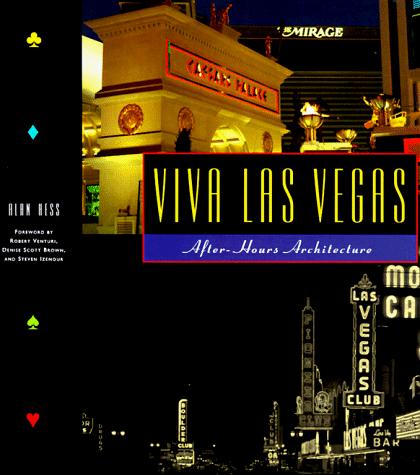
Viva Las Vegas: After-Hours Architecture
Traces architect Wayne McAllister's crucial transition from Los Angeles drive-in culture to designing the 1941 El Rancho Vegas and 1952 Sands.
View Hardcover on Amazon ↗
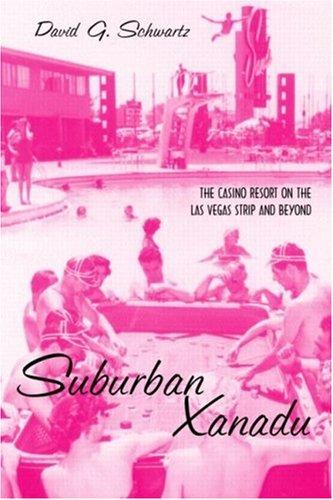
Suburban Xanadu: The Casino Resort on the Las Vegas Strip and Beyond
Explains why Hull's unincorporated Highway 91 location and Herb McDonald's $1 Buckaroo Buffet permanently reshaped casino resort economics.
View Hardcover on Amazon ↗
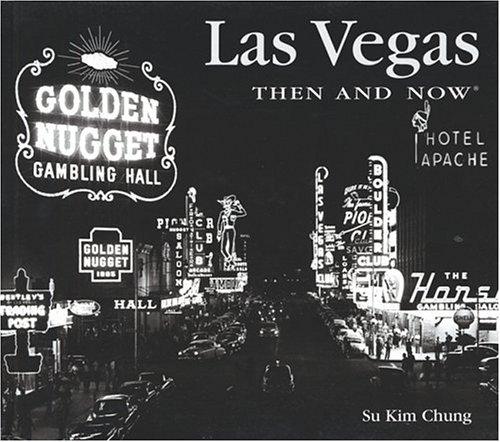
Las Vegas Then and Now
Compares archival 1940s photographs of Highway 91 and San Francisco Avenue with the modern North Strip skyline.
View Hardcover on Amazon ↗
Highway 91 & Strip History • 1942–2007
5 Photos

1945–1993 • Luxury Strip Origins
5 Photos

Flamingo Las Vegas History: Billy Wilkerson & Bugsy Siegel
Read Article →
1950–2001 • Classic Strip & Hughes Era
5 Photos

Desert Inn Las Vegas History: Wilbur Clark & Howard Hughes
Read Article →
1905–1939 • Early Las Vegas
5 Photos

1931 Las Vegas Gambling Legalization, Hoover Dam & Pair-O-Dice
Read Article →
