Moulin Rouge Hotel Las Vegas: 1955 Resort & 1960 Agreement
Read Article →
Welcome to Fabulous Las Vegas Sign History (1959): Betty Willis's Public-Domain Icon
The 25-foot-tall Welcome to Fabulous Las Vegas, Nevada sign was funded for $4,000 in May 1959 by the Clark County Commission, fabricated by Western Neon from a Googie design by 35-year-old local commercial artist Betty Whitehead Willis, and erected in the median at 5100 Las Vegas Boulevard South. Still standing on its original southern gateway site in unincorporated Paradise, owned by Young Electric Sign Company (YESCO), leased to Clark County, and listed on the National Register of Historic Places on May 1, 2009, the landmark remains completely uncopyrighted because Willis considered the design her public gift to the city.
Nearly every detail of the roadside monument defies casual tourist assumptions. It does not stand inside the City of Las Vegas, it was not commissioned by a casino, and for its first forty-nine years motorists had to park in gravel lanes or sprint across high-speed US Highway 91 traffic just to snap a photograph beneath its seven glowing white circles.

Circa 1959 photograph from the Joel Rosales Collection showing Betty Willis's newly erected 25-foot gateway sign rising from an open desert median along US Highway 91.
In This Article • 5 Archival Photographs
Click any photo to view full size
Archival Landmark Dossier
Funded & Erected
May 1959 ($4,000 Clark County Commission contract)
Exact Location
5100 Las Vegas Blvd. South, Paradise, NV (4 mi. south of city limits)
Designer & Salesman
Betty Whitehead Willis (designer) & Ted Rogich (Western Neon)
Height & Lighting
25 feet tall; neon tubing & yellow chasing incandescent bulbs
Current Physical Owner
Young Electric Sign Company (YESCO), leased to Clark County
Copyright & Landmark Status
Public domain (never copyrighted); NRHP listed May 1, 2009
How Did Salesman Ted Rogich and Artist Betty Willis Pitch the $4,000 Sign in May 1959?
In 1958, post-World War II motorists driving 290 miles northeast from Los Angeles across the Mojave Desert on two-lane US Highway 91 entered the Las Vegas Valley at night without any formal civic greeting. While Downtown's Fremont Street blazed beneath wall-to-wall neon seven miles north, the southern approach past McCarran Field and the Hacienda Hotel (opened June 1956 as the southernmost resort on the highway) faded abruptly into dark creosote scrub.
Ted Rogich, a veteran sign salesman at local shop Western Neon (and father of future political strategist Sig Rogich), saw an opportunity for a municipal civic marker funded jointly by Clark County and the Chamber of Commerce. Rogich brought the concept to Western Neon's prolific draftswoman and commercial designer, Betty Whitehead Willis. Born on May 20, 1923 in Overton, Nevada and raised in Las Vegas (where her father, Stephen Whitehead, served as Clark County Assessor) Willis had studied commercial art at the Chouinard Art Institute in Los Angeles during the height of Southern California's mid-century coffee-shop architecture boom before returning home as one of the very few women drafting high-voltage neon blueprints.
Willis had already proven her gift for kinetic roadside typography by designing the sweeping Parisian cursive marquee for the integrated 1955 Moulin Rouge Hotel on West Bonanza Road and the sculpted mid-flight cherub at the Blue Angel Motel on East Fremont Street. Clark County commissioners informally endorsed Rogich and Willis's gateway proposal in February 1959 and approved the final $4,000 appropriation in May 1959, installing the sign on the narrow highway median just south of Russell Road and north of the old McCarran Airport terminal entrance.

1959 archival view from the Charles Barnard / YESCO Sign Archive documenting Western Neon's newly completed $4,000 installation for Clark County.
What Do the Googie Diamond, Eight-Pointed Star & Seven White Circles Symbolize?
Rather than sketching a rectangular municipal highway placard, Willis combined three hallmarks of 1950s Southern California Googie architecture(acute boomerang angles, atomic starbursts, and mixed typographic scripts) into a single 25-foot tall roadside composition suspended between two twin steel-pipe stanchions.
The main cabinet uses a horizontally stretched, canted rhomboid (diamond) tilted backward at the top and forward at the base to convey forward automotive motion, bordered by chasing yellow incandescent bulbs inside stainless-steel channels. Across the upper left edge, Willis overlapped seven white translucent Plexiglas circles backlit from within and lettered W-E-L-C-O-M-E in red neon, explicitly designed to represent seven silver dollars honoring Nevada's official nickname, the "Silver State."
Crowning the vertical poles sits an eight-pointed yellow-and-red metal starburst outlined in neon, which Willis later credited to Walt Disney's Disneyland television opening Tinker Bell wand bursts: she wanted Las Vegas marketed not as a gritty gambling den, but as an adult wonderland. Inside the white luminous face, "TO Fabulous" flows in optimistic 1950s cursive above bold, sans-serif "LAS VEGAS" block letters and smaller "NEVADA" capitals. Just as thoughtfully, Willis used the north-facing reverse cabinet, seen by motorists heading back toward California with lighter wallets, to spell out a polite two-part farewell in red neon: "DRIVE CAREFULLY" above "COME BACK SOON."

Welcome to Fabulous Las Vegas, Nevada – February 22, 1960 Photo by Don English, Las Vegas News Bureau, LVCVA Archive. Tourist photo circa 1960, from Joe Schaerer.
Why Is the Welcome to Las Vegas Sign Located Four Miles Outside Las Vegas City Limits?
First-time visitors are routinely surprised to learn that the sign at 5100 Las Vegas Boulevard South, and indeed every major Strip resort south of Sahara Avenue, from the Sahara and Flamingo down to Mandalay Bay, actually sits inside the unincorporated town of Paradise, Nevada, governed directly by the Clark County Commission rather than the Mayor and City Council of Las Vegas.
In December 1950, when Las Vegas Mayor Ernie Cragin attempted to annex the lucrative Highway 91 casino strip into municipal boundaries to shore up city tax coffers, Strip resort executives led by Gus Greenbaum (Flamingo) and Wilbur Clark (Desert Inn) petitioned Clark County commissioners to establish the unincorporated township of Paradise Valley. Because Nevada law barred incorporated cities from annexing established unincorporated towns without consent, Sahara Avenue (2500 South) permanently froze as the southern border of the City of Las Vegas. Consequently, when Clark County commissioners funded Willis's sign in May 1959 at the southern fringe of developed casino parcels near the Hacienda and Tropicana Golf Club, they placed it roughly four miles south of the actual City of Las Vegas boundary.

Welcome to Fabulous Las Vegas, Nevada – February 22, 1960 Photo by Don English, Las Vegas News Bureau, LVCVA Archive. Tourist photo circa 1960, from Joe Schaerer.
Why Did Betty Willis Never Copyright the Sign, and Why Does YESCO Still Own It?
Under the United States Copyright Act of 1909 (still in force in 1959), works published or publicly erected without a formal copyright notice (the © symbol, year, and proprietor name) immediately and irrevocably entered the public domain upon publication. Neither Betty Willis, Western Neon, nor Clark County stamped a copyright notice on the 1959 sign or filed a federal design patent or trademark registration on its original artistic layout.
Asked repeatedly in later decades whether she regretted forfeiting millions of dollars in licensing royalties as her diamond-and-starburst emblem appeared on state license plates, shot glasses, neon clocks, casino chips, and Hollywood movie posters, Willis, who worked until age 77 and passed away in Overton on April 19, 2015 at age 91, never wavered. She explained bluntly that Western Neon paid her a fair salary to draw the sign, called it "my gift to the city," and noted that free worldwide reproduction advertised Las Vegas better than any paid tourism campaign ever could.
While nobody owns the intellectual property of the 1959 graphic design, a private company still owns the physical steel, aluminum, and glass monument standing on the median. In 1964, Salt Lake City-based Young Electric Sign Company (YESCO) acquired Western Neon and its portfolio of leased municipal and casino signs. Rather than buying out the residual hardware contract, Clark County chose to continue leasing the sign from YESCO, meaning YESCO technicians still replace every burned-out yellow incandescent bulb and hand-blown neon glass tube today.

Welcome to Fabulous Las Vegas, Nevada – February 22, 1960 Photo by Don English, Las Vegas News Bureau, LVCVA Archive. Western singers Sons of the Pioneers welcome you to Las Vegas, circa 1960.
How Did the 2008 Parking Lot, Solar Trees & 2009 Historic Listing Change the Site?
For nearly half a century after Don English's famous February 22, 1960 Las Vegas News Bureau publicity photographs popularized the sign worldwide, visiting it on foot required reckless jaywalking. As US Highway 91 widened from a quiet two-lane desert road into six lanes of 45-mph Las Vegas Boulevard traffic, wedding parties and tourists routinely abandoned rental cars in the center turn lane and vaulted low concrete curbs.
| Date | Milestone at 5100 Las Vegas Blvd. South | Engineering, Legal, or Preservation Impact |
|---|---|---|
| Feb–May 1959 | Clark County Approves $4,000 Contract | Ted Rogich pitches gateway marker; Betty Willis drafts 25-ft Googie sign at Western Neon without copyright notice. |
| Feb 22, 1960 | Las Vegas News Bureau Publicity Shoot | Photographer Don English distributes iconic images nationally, turning the south Highway 91 median into a photo stop. |
| 1964 | YESCO Acquires Western Neon | Young Electric Sign Company assumes physical ownership of the sign and ongoing maintenance lease with Clark County. |
| Oct 1999 | One-Month Electricity Outage | Sign goes dark for a month after billing records lapse following a road-widening contractor handover; promptly restored. |
| Dec 8, 2008 | First Official Median Parking Lot Opens | $400,000 Clark County safety project adds 12 parking spaces, 2 bus bays, paved median plaza, and pedestrian access. |
| May 1, 2009 | National Register of Historic Places | Listed under NRHP Reference #09000284 upon reaching its 50th anniversary; Nevada State Register follows in Dec 2013. |
| 2012–2015 | Lot Expansion, Signal & Solar Trees | Parking expanded past 30 spaces with signalized crosswalks (2012/2015); three solar trees installed Oct 2014 to offset draw. |
Clark County ended the pedestrian hazard on December 8, 2008 by opening a dedicated $400,000 median turn-in parking lot, expanded again in 2012 and 2015 alongside signalized push-button crosswalks and three photovoltaic "solar trees" unveiled in October 2014 to power the sign's 89 yellow incandescent border bulbs and neon transformers with desert sunlight. Note, too, that replica signs erected Downtown on Las Vegas Boulevard near the former Moulin Rouge/Stratosphere corridor (2002) and on Boulder Highway (2007, reading "Welcome to Fabulous Downtown Las Vegas" and "East Las Vegas") are modern civic homages; only the 25-foot steel structure at 5100 Las Vegas Boulevard South is Betty Willis's authentic 1959 original.
Frequently Asked Questions
What does the back of the Welcome to Fabulous Las Vegas sign say?
The north-facing reverse side of the 1959 sign, visible to southbound drivers leaving the Las Vegas Strip toward Interstate 15 and Southern California, displays two stacked safety and hospitality messages in red neon lettering inside the white rhomboid cabinet: 'DRIVE CAREFULLY' across the upper half and 'COME BACK SOON' across the lower half, framed by the same seven white circles and yellow chasing bulbs.
Why can anyone print the Welcome to Las Vegas sign on souvenirs without paying royalties?
Designer Betty Willis and fabricator Western Neon erected the sign in May 1959 without affixing a statutory copyright notice or registering a federal design patent, placing the artwork permanently into the public domain under the 1909 Copyright Act. Willis intentionally declined to seek proprietary control, stating throughout her life that she viewed the design as her gift to Las Vegas and welcomed its unrestricted commercial use.
Are there multiple Welcome to Fabulous Las Vegas signs around the city?
Only one authentic 1959 sign exists, located in the median at 5100 Las Vegas Boulevard South just south of Russell Road and north of Sunset Road. Later municipal tribute signs, including a larger 'Welcome to Fabulous Downtown Las Vegas' sign installed on Las Vegas Boulevard North in 2002 (rebuilt after a 2016 truck crash) and a 2007 Boulder Highway replica, are modern copies rather than historic artifacts.
Has the original 1959 Welcome to Las Vegas sign ever been moved from its original spot?
The sign has stood along the same southern gateway stretch of US Highway 91 (now 5100 Las Vegas Boulevard South) just north of the old McCarran Field entrance since May 1959, experiencing only minor median curbing, pole-base, and road-widening adjustments as the highway expanded from two lanes to a multi-lane boulevard. Its continuous in-situ integrity qualified it for listing on the National Register of Historic Places on May 1, 2009.
Curated Historical Bibliography
Recommended Las Vegas History Books
Recommended historical books and architectural studies covering this landmark. As an Amazon Associate, LasVegasArchive.com earns from qualifying purchases.
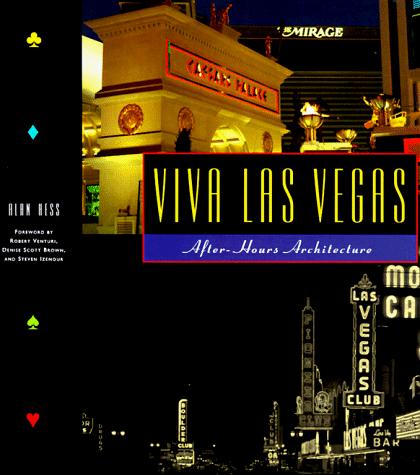
Viva Las Vegas: After-Hours Architecture
Alan Hess's foundational study of Googie commercial signage and how Betty Willis, Western Neon, and YESCO gave postwar Las Vegas its architectural identity.
View Hardcover on Amazon ↗
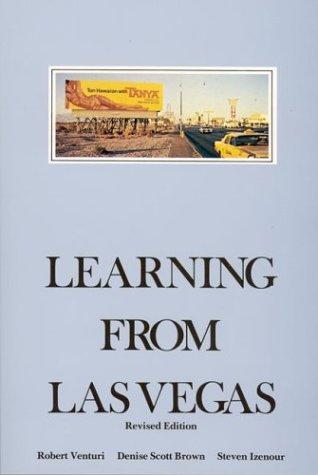
Learning from Las Vegas: The Forgotten Symbolism of Architectural Form
Analyzes Highway 91 roadside signs as 'ducks' and 'decorated sheds' built specifically to be read through a car windshield at 45 miles per hour.
View Hardcover on Amazon ↗
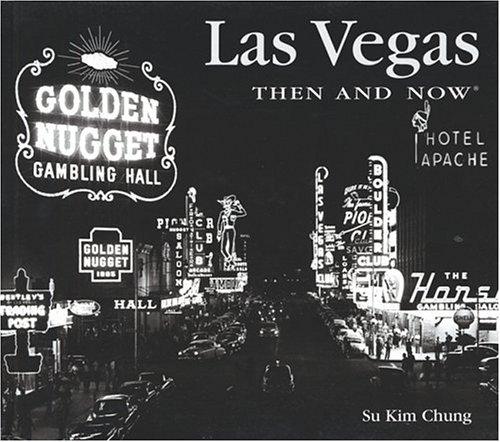
Las Vegas Then and Now
Contrasts archival 1950s views of the isolated south Highway 91 desert median with the modern multi-lane Las Vegas Strip.
View Hardcover on Amazon ↗
1955–1960 • Civil Rights & Westside Era
5 Photos

South Strip Aviation & Neon Era • 1956–1996
5 Photos

Hacienda Hotel Las Vegas History: 64-Day Flight & Implosion
Read Article →
Downtown Glitter Gulch • 1905–1995
5 Photos

Vegas Vic Pioneer Club Fremont Street History: Glitter Gulch
Read Article →
1993–2024 • Strip Megaresort Era
5 Photos

Las Vegas Casino Implosions Timeline: Every Blast (1993–2024)
Read Article →
