Desert Inn Las Vegas History: Wilbur Clark & Howard Hughes
Read Article →
Landmark Hotel Las Vegas: Frank Carroll's Stalled Space-Age Tower, Howard Hughes, and the 1995 Implosion
The Landmark Hotel and Casino opened on July 1, 1969, at 364 Convention Center Drive, nearly eight years after Kansas City developer Frank Carroll and architect Edward Hendricks broke ground in late 1961 on a 31-story, 356-foot Space-Needle-style mushroom tower, which operated until August 8, 1990, and collapsed in a 17-second Controlled Demolition Inc. implosion on November 7, 1995. Rising directly across Paradise Road from the 1959 Las Vegas Convention Center, the steel-and-concrete saucer stood unfinished for years as "Frank Carroll's Folly" before Teamsters pension financing and billionaire Howard Hughes's $17.3 million purchase brought it online.
Architecturally bold yet commercially cursed, the 503-room Landmark embodied the Jet Age optimism of early-1960s Southern Nevada while illustrating the harsh physics of casino profitability. Isolated half a mile east of Las Vegas Boulevard foot traffic and bottlenecked by exterior glass elevators feeding a cramped skytop dome, the resort bled millions under four successive owners before achieving screen immortality in Martin Scorsese's Casino and Tim Burton's Mars Attacks!.

Photographer Bernard Gotfryd's December 1963 view of the stalled 356-foot Landmark tower rising above Paradise Road and Convention Center Drive a year after construction funds ran dry.
In This Article • 5 Archival Photographs
Click any photo to view full size
Archival Landmark Dossier
Street Address
364 Convention Center Drive (at Paradise Road), Las Vegas, NV
Developer & Architect
Frank & Susan Carroll • Edward Hendricks (architect)
Height & Design
356 feet (31 stories) • Tallest building in Nevada (1962–1969)
Construction & Opening
Started late 1961 (stalled 1962–66); opened July 1, 1969 by Howard Hughes
Closure Date
August 8, 1990 (503 guest rooms; final owner William "Bill" Morris)
Implosion Specs
November 7, 1995 at 5:34 a.m. • 100 lbs explosives • 17-second collapse
Why Did Frank Carroll and Architect Edward Hendricks Build a 356-Foot Space Tower Off the Strip?
In 1960, Frank S. Carroll, who with his wife Susan Carroll had developed the successful Plaza Motor Inn in Kansas City, Missouri, purchased 22 acres at the corner of Paradise Road and Convention Center Drive, 0.6 miles east of the Las Vegas Strip. Carroll bet that the silver-domed Las Vegas Convention Center, opened directly across the street in April 1959, would pull tens of thousands of business delegates eastward into a new high-rise corridor independent of Highway 91.
To make the off-Strip property visible from every resort pool on Las Vegas Boulevard and every airliner descending into McCarran Field, Carroll hired architect Edward Hendricks in 1961. Working simultaneously with John Graham Jr.'s design for the 1962 Seattle World's Fair Space Needle, Hendricks engineered a slip-formed, steel-reinforced hexagonal concrete core rising 31 stories (356 feet) above two- and three-story curved garden room wings. Early framing photographs from the Strip are preserved in the Landmark archival photo collection.
Cantilevered near the summit sat a 140-foot-wide, three-level saucer pod clad in anodized aluminum ribs and angled glare-reducing glass. Hendricks placed penthouse suites on the 27th and 28th levels, a cocktail lounge and Chinese restaurant on the 29th, and the circular Skytop Showroom at the crown, making the Landmark the tallest structure in Nevada upon topping out in 1962.

Looking east from the Las Vegas Strip circa 1962 as the Landmark's concrete elevator core and cantilevered dome began dominating the Paradise Valley skyline.
Why Did the Unfinished Landmark Sit Empty as 'Frank Carroll's Folly' from 1962 to 1968?
General construction began in late 1961 on an optimistic $8.3 million budget, with concrete crews pouring the vertical shaft rapidly across early 1962. By December 1962, when structural framing stood roughly 80 percent complete, Carroll's primary lending syndicate collapsed and cost overruns left subcontractors holding more than $2 million in unpaid mechanic's liens. Cranes froze in place, leaving a windowless concrete stalk looming over Paradise Road that locals dubbed "Frank Carroll's Folly."
For more than three years between 1963 and early 1966, Carroll fought off foreclosure petitions while shopping Wall Street and private lenders for rescue capital. Relief arrived in March 1966 when the Teamsters Central States, Southeast and Southwest Areas Pension Fund approved a $5.5 million construction loan. Fresh capital allowed Hendricks and Carroll to enclose the saucer pod in crimson-and-silver paneling, mount giant 16-foot illuminated red "LANDMARK" block letters around the dome's rim, finish 503 guest rooms, and attach an exterior glazed elevator shaft scaling the tower's spine.
By late 1967, furniture and slot machines sat inside the completed resort, and Carroll announced a New Year's Eve 1967 opening. Yet Carroll had exhausted his liquid cash reserves paying down construction overruns and could neither post the mandatory casino bankroll required by the Nevada Gaming Control Board nor settle lingering creditor judgments, leaving the fully furnished Space-Age tower dark through 1968.

Wayne Violette's 1962 construction photograph capturing the exposed steel ribs of the Landmark's upper saucer pod shortly before work halted in December 1962.
Why Did Howard Hughes Pay $17.3 Million for the Landmark and Open It on July 1, 1969?
Watching Paradise Road through binoculars from his ninth-floor Desert Inn penthouse a mile northwest, aviation mogul Howard Hughes grew fascinated with the Landmark's airport-control-tower profile, and alarmed that rival tycoon Kirk Kerkorian was building the giant 30-story, 1,512-room International Hotel right next door on Paradise Road. Despite warnings from U.S. Department of Justice antitrust attorneys that Hughes already controlled too many Strip casinos, Hughes Tool Company paid $17.3 million in January 1969 to buy out Carroll, retire the Teamsters mortgage, and satisfy every unpaid contractor lien in full.
Hughes spared nothing on the July 1, 1969 opening night, timed deliberately to beat Kerkorian's International Hotel debut by twenty-four hours. Five hundred invited celebrities packed the 29th-floor Skytop Showroom to watch comedian Danny Thomas, whom Hughes booked specifically because Thomas had headlined the 1952 opening of the Sands. Outside, searchlights swept the saucer's red neon lettering while exterior glass elevators glided 300 feet up the illuminated concrete shaft.
Four weeks later, when Elvis Presley launched his historic July 31, 1969 comeback engagement across the street at the International Hotel, Presley initially stayed inside the Landmark's top-floor dome penthouse suite while renovations finished on his 30th-floor Imperial Suite at the International, watching his own giant marquee glow directly across Paradise Road.

Landmark under construction, 1962. Construction of the tower began early ‘62, and stalled by the year’s end.
Why Did the Landmark Hotel Lose Money Under Summa Corp and Bill Morris (1970–1990)?
Once opening-month curiosity faded, severe architectural and geographic defects crippled the Landmark's finances. Sitting two long desert blocks east of Las Vegas Boulevard, the casino captured virtually zero casual walk-in Strip traffic, while convention attendees crossing Paradise Road increasingly gravitated to the International (renamed the Las Vegas Hilton in 1971), which boasted three times the rooms, a 2,000-seat showroom, and a sprawling casino floor.
Inside the Landmark, Hendricks's dramatic verticality worked against casino economics. High-elevation winds frequently forced the slow exterior glass elevators to shut down or shudder, stranding dinner-show patrons in ground-floor lobbies, while strict Clark County fire-egress codes capped occupancy inside the 29th-floor Skytop Showroom at roughly 450 seats, far too small to amortize top Strip headliner salaries. On July 15, 1977, carbon-monoxide fumes drawn into an air intake from an electrical-vault fire killed one guest and injured over a hundred, further tarnishing the aging property's reputation.
After bleeding millions, Hughes's Summa Corporation sold the Landmark in 1974 to Riviera co-owner Ed Torres, who turned it back over before Las Vegas grading contractor William "Bill" Morris purchased the resort in 1983 for roughly $15 million. Morris renamed the sky lounge the Sunset Room, experimented with a 1920s Art Deco "Roaring Twenties" motif, and courted budget tour buses, but could not service debt once 3,000-room Strip megaresorts led by Steve Wynn's 1989 Mirage siphoned away mid-market occupancy. Buried under $25 million in IRS and creditor obligations, the Landmark locked its doors permanently on August 8, 1990.

Landmark Hotel & Casino Landmark tower, unfinished, December 1963. Photo by Bernard Gotfryd.
How Was the Landmark Imploded on November 7, 1995, and Filmed for Mars Attacks!?
Standing shuttered and peeling for five years between 1990 and 1995, the Landmark served one final turn as a period movie set. In autumn 1994, director Martin Scorsese dressed its sweeping circular mid-century porte-cochère with neon tubing to film exterior arrival scenes for the fictional Tangiers Resort in Casino (1995), starring Robert De Niro and Sharon Stone.
In 1993, the Las Vegas Convention and Visitors Authority (LVCVA) bought the 21-acre Landmark parcel out of receivership for $16.1 million. Although architectural historians and preservationists lobbied the LVCVA board to spare the Googie saucer tower as a non-gaming convention observation deck, engineers estimated asbestos abatement and structural retrofits past $30 million, and board members voted narrowly to clear the acreage for 2,000 surface convention parking spaces.
Maryland-based Controlled Demolition Inc. (CDI) and Abbie Wrecking stripped the dome's glass and aluminum skin down to its bare skeletal steel ribs and drilled 100 pounds of explosives into the concrete core's lower stories. At 5:34 a.m. on Tuesday, November 7, 1995, sequential blasts undercut the eastern base; the 356-foot shaft bowed gracefully like a felled redwood before the steel saucer slammed into the desert dirt in 17 seconds, a blast compared alongside every other Strip demolition in our Las Vegas casino implosions timeline. Director Tim Burton surrounded the perimeter with multiple Panavision cameras and spliced the real collapse into Mars Attacks! (1996) as the fictional "Galaxy Hotel" vaporized by a Martian flying saucer.
How Did the Landmark Evolve from 1961 Groundbreaking to 1995 Implosion?
From its eight-year gestation to its 17-second demise, the Landmark compressed every boom-and-bust cycle of Space-Age Las Vegas into a single 22-acre corner.
| Date | Milestone | Key Figures & Structural Details |
|---|---|---|
| Late 1961 | Groundbreaking | Frank Carroll & architect Edward Hendricks begin 356-ft, 31-story concrete shaft. |
| Dec 1962 | Construction Stalls | Lender collapse halts work at 80% completion with $2M+ liens ("Frank Carroll's Folly"). |
| March 1966 | $5.5M Teamsters Loan | Central States Pension Fund finances saucer glazing, neon sign & 503 guest rooms. |
| Jan 1969 | $17.3M Hughes Buyout | Howard Hughes's Summa/Hughes Tool Co. buys property to rival next-door International. |
| July 1, 1969 | Gala Opening | Danny Thomas headlines Skytop Showroom; Elvis Presley stays in dome suite later in July. |
| Aug 8, 1990 | Permanent Closure | Closes under owner Bill Morris amid Chapter 11 debt and megaresort competition. |
| Nov 7, 1995 | 5:34 a.m. Implosion | LVCVA hires CDI; 100 lbs explosives drop 356-ft tower in 17 seconds for Mars Attacks!. |
After serving for twenty-two years as the Las Vegas Convention Center's Gold Lot parking expanse, the former Landmark Hotel site and adjacent Riviera land were redeveloped between 2018 and 2021 into the $1 billion, 1.4-million-square-foot Las Vegas Convention Center West Hall.
Frequently Asked Questions
Was the Landmark tower ever the tallest building in Nevada?
Yes. When concrete slip-form crews topped out the Landmark's 31-story, 356-foot elevator core and steel saucer pod in 1962, it surpassed every structure on the Strip and Downtown to become the tallest building in Nevada, even while sitting unoccupied for nearly seven years, until Kirk Kerkorian's 30-story, 375-foot International Hotel opened across Paradise Road in July 1969.
Did Elvis Presley perform at the Landmark or only stay there?
Elvis Presley never headlined the Landmark's small 29th-floor Skytop Showroom; his 636 sold-out Las Vegas concerts between 1969 and 1976 took place directly across Paradise Road in the 2,000-seat showroom of the International Hotel (later the Las Vegas Hilton). However, Presley stayed in the Landmark's top-floor dome suite during his summer 1969 rehearsals and opening run.
Which Hollywood movies used footage of the Landmark Hotel and its 1995 implosion?
Three notable films captured the shuttered Landmark between 1994 and 1995. Martin Scorsese filmed its neon-lit circular porte-cochère as the entrance to the fictional Tangiers Casino in Casino (1995); Tim Burton filmed the live November 7, 1995 implosion with multi-angle cameras for Mars Attacks! (1996); and Wayne Kramer used archival footage of the blast at the end of The Cooler (2003).
What stands on the former Landmark Hotel site at 364 Convention Center Drive today?
Today the former 22-acre Landmark Hotel parcel at 364 Convention Center Drive (the northeast corner of Paradise Road and Convention Center Drive) sits beneath the outdoor plaza and western exhibition hall of the $1 billion Las Vegas Convention Center West Hall, which opened in June 2021 on the former post-implosion parking lot.
Curated Historical Bibliography
Recommended Las Vegas History Books
Recommended historical books and architectural studies covering this landmark. As an Amazon Associate, LasVegasArchive.com earns from qualifying purchases.
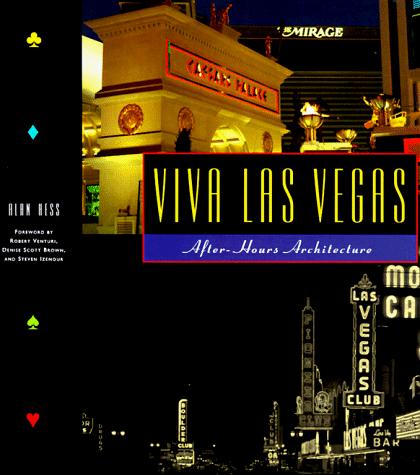
Viva Las Vegas: After-Hours Architecture
Examines Edward Hendricks's Space-Age Landmark tower and Googie roadside geometry alongside 1960s Strip high-rises.
View Hardcover on Amazon ↗
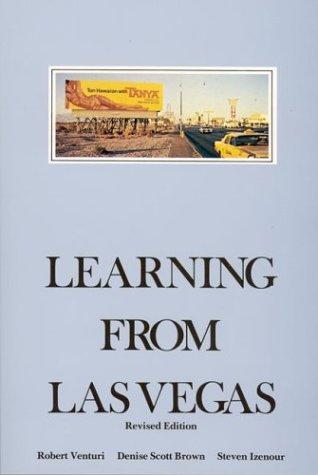
Learning from Las Vegas: The Forgotten Symbolism of Architectural Form
Documents the late-1960s architectural interplay between monumental roadside symbols, convention corridors, and low-slung casinos.
View Hardcover on Amazon ↗
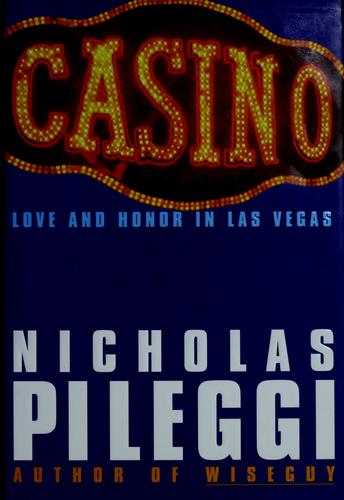
Casino: Love and Honor in Las Vegas
Chronicles the 1970s Las Vegas casino environment dramatized when Martin Scorsese used the Landmark's porte-cochère in the 1995 film.
View Hardcover on Amazon ↗
1950–2001 • Classic Strip & Hughes Era
5 Photos

Showroom Golden Age • 1969–1976
5 Photos

Elvis Presley International Hotel Las Vegas History (1969–76)
Read Article →
1993–2024 • Strip Megaresort Era
5 Photos

Las Vegas Casino Implosions Timeline: Every Blast (1993–2024)
Read Article →
1989–2024 • Megaresort Era
5 Photos

The Mirage Las Vegas History (1989–2024): Volcano to Hard Rock
Read Article →
