Vegas Vic Pioneer Club Fremont Street History: Glitter Gulch
Read Article →
Binion's Horseshoe Las Vegas (1951): Benny Binion, the $1 Million Cash Display & the Birth of the World Series of Poker
Binion's Horseshoe Club opened on August 14, 1951 at 128 E Fremont St in Downtown Las Vegas, after former Dallas policy-wheel boss Lester Ben 'Benny' Binion bought out Noel Simon's Eldorado Club on the ground floor of the historic 1932 Apache Hotel. Famous for eliminating upper betting limits on a gambler's opening wager, exhibiting one hundred genuine $10,000 bills inside a seven-foot gold horseshoe starting in December 1954, and launching the World Series of Poker in May 1970, the property operated under Binion family control until a January 2004 U.S. Marshals shutdown split its legacy between Downtown's Binion's Gambling Hall and Caesars Entertainment's Horseshoe brand.
Unlike Strip impresarios who seduced tourists with feathered Parisian showgirls or Greco-Roman marble, Benny Binion, a near-illiterate Texas horse trader wearing Stetson hats and solid-gold pearl-snap buttons, built a shrine strictly for action players. His formula remained unchanged until his death on Christmas Day 1989: 'Good food, good whiskey, good gamble.'

Benny Binion's Horseshoe Club blazing with neon at Fremont and Second Streets (now Casino Center Boulevard) in 1953, two years after Binion converted the Eldorado Club and Apache Hotel into Downtown's premier high-action gambling hall. (LasVegasArchive Collection)
In This Article • 5 Archival Photographs
Click any photo to view full size
Archival Landmark Dossier
Address
128 E Fremont St, Downtown Las Vegas (Apache Hotel building)
Opening Date
August 14, 1951 (Replaced Noel Simon's Eldorado Club)
Founder
Lester Ben 'Benny' Binion (1904–1989) & son Jack Binion
$1,000,000 Display
100 Series 1934 $10,000 bills (Unveiled Dec 11, 1954; sold c. 2000)
Birth of the WSOP
May 1970 (7 pros elect Johnny Moss; $10K freezeout begins 1971)
2004 Brand Split
Binion's Gambling Hall (Downtown) vs. Caesars' WSOP & Horseshoe
How Did Dallas Gambler Benny Binion Open the Horseshoe Club at 128 E Fremont Street in 1951?
Born on November 20, 1904 in Grayson County, Texas, sickly rural youth Lester Ben Binion never completed formal schooling yet mastered craps odds, moonshine logistics, and numbers-racket accounting across Depression-era Dallas. By World War II, Binion controlled illegal policy wheels and dice games out of Dallas's Southland Hotel under political protection, carrying two pistols after killing two rivals in self-defense rulings during the 1930s, until a newly elected reform sheriff refused payoffs in November 1946 and unleashed a lethal ten-year bombing feud with rival Texas gambler Herbert Noble.
Packing roughly $2 million in cash into suitcases, Binion fled with his wife Teddy Jane and young children to Las Vegas in late 1946. After buying an initial partnership in Downtown's Las Vegas Club (1947–1950) and falling out with co-owners over house bet ceilings, Binion paid roughly $165,000 in 1951 for Noel Simon's struggling Eldorado Club and leased P.O. Silvagni's adjoining three-story 1932 Apache Hotel at 128 E Fremont St, reopening the corner on August 14, 1951 as Binion's Horseshoe Club.
The Binion's Horseshoe archival collection captures the early 1950s Fremont Street exterior, including the famous atomic-blast souvenir postcards Binion distributed during 1950s Nevada Test Site mushroom-cloud mornings. Inside, Binion ripped up Downtown's customary sawdust floors to lay plush wall-to-wall Western carpet, skipped showroom singers altogether, served $2 late-night New York strip steaks and savory ham-and-beans in the basement coffee shop, dispatched complimentary Cadillac limousines to the airport even for modest $50 players, and dealt single-zero roulette alongside generous ten-times craps odds.

Atom Bomb Blasts - Actual pictures photographed from vantage point high atop Mount Charleston near Las Vegas - courtesy Benny Binion’s Horseshoe Club, downtown Las Vegas, Nev. - Postcards c.
How Did Binion's No-Ceiling Bet Rule Attract William Lee Bergstrom's $777,000 Craps Wager?
While rival resorts capped craps and blackjack wagers at $200 or $500 to shield house bankrolls against variance swings, Binion instituted the boldest house rule in gaming history: whatever sum a stranger wagered on their very first bet at the Horseshoe became that player's personal table limit for the session, whether $500 or $500,000.
On September 24, 1980, quiet twenty-nine-year-old Austin, Texas real-estate investor William Lee Bergstrom, immortalized as the 'Suitcase Man' or 'Phantom Gambler', tested whether Binion's promise was mere publicity talk. Carrying two suitcases into the Horseshoe (one stuffed with $777,000 in bundled currency borrowed against gold-futures credit lines, the second completely empty) Bergstrom asked Jack and Benny Binion to wire-confirm and accept the entire $777,000 on a single 'Don't Pass' craps bet against the shooter.
Without flinching, Benny Binion stacked $777,000 in Horseshoe chips onto the felt. After establishing a point of six, the shooter rolled a seven three tosses later, handing Bergstrom an instant $777,000 profit; Ted and Benny Binion personally helped Bergstrom pack $1,554,000 in cash into both suitcases before he vanished into the night. Bergstrom returned on March 24, 1984 to win a $538,000 single craps wager, then walked back in on November 16, 1984 with $1,000,000 in cash, lost on a third-roll seven-out on the Don't Pass line, and died by suicide in a Strip hotel room three months later.

Atom Bomb Blasts - Actual pictures photographed from vantage point high atop Mount Charleston near Las Vegas - courtesy Benny Binion’s Horseshoe Club, downtown Las Vegas, Nev. - Postcards c.
Who Created the $1,000,000 Cash Display of $10,000 Bills and Where Are Those Notes Today?
Irony surrounded the Horseshoe's most photographed landmark: Benny Binion was sitting inside Leavenworth Federal Penitentiary when it debuted. In December 1953, federal prosecutors sent Binion to Leavenworth on a five-year sentence for Dallas income-tax evasion, permanently costing him the legal right to hold a Nevada gaming license in his own name. Forced to raise millions for IRS back taxes and fines, Binion sold controlling equity in the Horseshoe to wealthy New Orleans oilman and Thoroughbred sportsman Joe W. Brown under a handshake understanding that the Binions could buy back in later.
On December 11, 1954, Brown unveiled a masterstroke of roadside theater inside the casino: one hundred genuine $10,000 Series 1934 Federal Reserve Notes, bearing the portrait of Lincoln-era Treasury Secretary Salmon P. Chase, sealed behind thick bulletproof glass inside a seven-foot-tall gold horseshoe flanked by shotgun-toting guards. Although Brown liquidated that first $1 million display in 1959 while returning ownership piece by piece to Teddy Jane Binion and twenty-six-year-old casino president Jack Binion, Benny Binion, released from prison in 1957 and holding court daily at a corner restaurant booth as an unlicensed 'advisor', assembled a second intact set of one hundred New York Federal Reserve Series 1934 $10,000 bills in 1964.
Because the U.S. Treasury and Federal Reserve halted distribution of high-denomination $500, $1,000, $5,000, and $10,000 currency on July 14, 1969 and destroyed returned notes, the Binion hoard soon represented nearly one-third of all surviving $10,000 bills in private hands worldwide. More than five million visitors took home free souvenir Polaroids beside the golden horseshoe before bitter late-1990s family litigation led daughter Becky Binion Behnen to dismantle and sell all 100 notes in 1999–2000 to Kansas City rare-currency dealer Jay Parrino for roughly $4 million to $6 million. Certified in custom 'Binion Hoard' numismatic holders, single $10,000 notes from the display routinely command $180,000 to $480,000 apiece at auction today.

Horseshoe Club at Apache Hotel, Las Vegas, 1954. Campaign posters on the hotel for Eugenia Clair Smith, heiress of a turn-of-the-century coffee fortune.
How Did the 1949 Johnny Moss Marathon and the May 1970 Reunion Birth the World Series of Poker?
High-stakes poker folklore traces back to early 1949, while Binion was still a partner down the block at the Las Vegas Club before opening the Horseshoe, when legendary Greek-born high roller Nick 'The Greek' Dandolos allegedly asked Binion to arrange a heads-up no-limit marathon against Odessa, Texas road gambler Johnny Moss. Played in public view to draw crowds alongside Fremont Street rivals such as the Four Queens and Nevada Club, the five-month clash across five-card stud, lowball, and deuce-to-seven reportedly swung $2 million to $4 million before an exhausted Dandolos stood up and delivered poker's most famous concession: 'Mr. Moss, I have to let you go.'
Twenty years later, after Reno casino host Tom Moore staged a 1969 'Texas Gamblers Reunion' at the Holiday Hotel, Benny and Jack Binion brought the gathering to Binion's Horseshoe in May 1970 and christened it the World Series of Poker. For that inaugural 1970 contest, seven invited road pros (Johnny Moss, Doyle 'Texas Dolly' Brunson, Thomas 'Amarillo Slim' Preston, Walter 'Puggy' Pearson, Bryan 'Sailor' Roberts, Crandell Addington, and Carl Cannon) played cash games for days before electing Moss champion by secret ballot (after first voting for themselves).
Observing that reporters could not dramatize a cash-game vote, Los Angeles newspaperman Tom Thackrey Jr. and oddsmaker Jimmy 'The Greek' Snyder persuaded Jack Binion to switch in May 1971 to a winner-take-all $10,000 buy-in No-Limit Texas Hold'em freezeout tournament, won again by Moss over five opponents. Thirty-two years later, in May 2003 inside Binion's upstairs poker room, Tennessee accountant Chris Moneymaker parlayed an $86 online satellite entry into the $2.5 million WSOP Main Event bracelet over 839 entrants on ESPN, igniting the global poker boom.
| Year / Date | Horseshoe & WSOP Milestone | Key Figures | Historical Impact |
|---|---|---|---|
| Early 1949 | Moss vs. Dandolos Heads-Up Marathon | Benny Binion, Johnny Moss, Nick Dandolos | Five-month public poker match inspires later WSOP lore |
| Aug 14, 1951 | Binion's Horseshoe Club Opens | Benny Binion | Converts Eldorado Club & 1932 Apache Hotel at 128 E Fremont St |
| Dec 11, 1954 | $1,000,000 Cash Display Unveiled | Joe W. Brown (Recreated 1964 by Binion) | 100 crisp $10,000 bills attract 5M+ free tourist souvenir photos |
| May 1970 & 1971 | World Series of Poker Launches | Benny & Jack Binion, Johnny Moss | 7-player 1970 cash vote shifts to $10,000 Hold'em freezeout in 1971 |
| Sep 24, 1980 | $777,000 Single Craps Wager | William Lee Bergstrom ('Suitcase Man') | Validates Binion's no-ceiling opening-bet guarantee in cash |
| May 1988 | Acquisition of Neighboring Mint Hotel | Jack Binion | Absorbs 100 E Fremont St & 26-story tower across full city block |
| May 23, 2003 | Moneymaker Wins Final Full Binion Era WSOP | Chris Moneymaker, Sammy Farha | 839-player field sparks worldwide televised Texas Hold'em boom |
| Jan–Mar 2004 | U.S. Marshals Shutdown & Harrah's Split | Becky Behnen, Harrah's, MTR / TLC | Harrah's keeps WSOP & Horseshoe brands; 128 E Fremont becomes Binion's |

Fremont St, 1954. After the opening of Lucky Strike Club (6/30/54).
Why Did U.S. Marshals Shut Down Binion's Horseshoe in January 2004 and Split the Brand?
Under Jack Binion's disciplined management from 1963 through 1998, the Horseshoe expanded steadily, purchasing Milton Prell's neighboring Mint Hotel & Casino at 100 E Fremont St from Del Webb in May 1988, knocking down the dividing brick wall to double casino floor space and add Martin Stern Jr.'s twenty-six-story hotel tower. After Benny Binion died at age eighty-five on December 25, 1989, however, family unity fractured. Brother Lonnie 'Ted' Binion lost his gaming license over drug violations before dying under sensationalized circumstances in September 1998, and sister Becky Binion Behnen concluded a hostile legal buyout of Jack Binion that same year while Jack went on to build billion-dollar riverboat casinos elsewhere under Horseshoe Gaming.
Burdened by debt, stripped of the 100 rare $10,000 bills sold around 2000, and falling behind on union health-and-pension payments, the casino collapsed on the evening of January 9–10, 2004, when IRS agents and armed U.S. Marshals marched onto the gaming floor and confiscated roughly $1 million to $2 million directly out of the cashier's cage, leaving the house without statutory bankroll reserves and forcing an immediate shutdown.
In March 2004, Harrah's Entertainment (now Caesars Entertainment) stepped in to buy the shuttered property solely to unite domestic rights to the Horseshoe casino name and the World Series of Poker, moving the WSOP off Fremont Street after 2005 and eventually placing the Horseshoe neon onto the original 1973 MGM Grand tower on the Strip in December 2022. Harrah's immediately flipped the historic 128 E Fremont St real estate to MTR Gaming Group, which sold it in March 2008 to Terry Caudill's TLC Casino Enterprises, operating today as Binion's Gambling Hall & Hotel, complete with a restored ninety-room boutique Hotel Apache and a recreated $1 million pyramid of smaller-denomination U.S. currency.
Frequently Asked Questions
Is the $1 million cash display still at Binion's on Fremont Street today?
The original display of one hundred rare Series 1934 $10,000 Federal Reserve Notes was dismantled and sold by Becky Binion Behnen around 1999–2000 to currency dealer Jay Parrino, and individual notes have since been auctioned to collectors. Today, Binion's Gambling Hall at 128 E Fremont St offers free tourist photos beside a newer $1,000,000 acrylic pyramid stacked with $1, $20, and $100 bills.
Why is there both a Binion's Downtown and a Horseshoe on the Las Vegas Strip?
Following the January 2004 U.S. Marshals raid and closure of Binion's Horseshoe, Harrah's Entertainment (now Caesars) purchased the bankrupt business, kept global trademark rights to both 'Horseshoe' and 'World Series of Poker,' and sold the physical 128 E Fremont St building under the name Binion's Gambling Hall. Caesars later rebranded Bally's on the Strip into Horseshoe Las Vegas in December 2022.
How many players entered the first World Series of Poker at Binion's in 1970?
Only seven invited poker professionals participated in the inaugural May 1970 World Series of Poker at Binion's Horseshoe: Johnny Moss, Doyle Brunson, Amarillo Slim Preston, Puggy Pearson, Sailor Roberts, Crandell Addington, and Carl Cannon. Rather than playing a tournament bracket, they played cash sessions and elected Johnny Moss champion by secret ballot before adopting a $10,000 freezeout in 1971.
Why couldn't Benny Binion hold a Nevada gaming license after 1953?
After pleading guilty to federal income-tax evasion stemming from his 1940s Dallas gambling operations and serving more than three years at Leavenworth Federal Penitentiary between December 1953 and 1957, Benny Binion was permanently barred by Nevada regulators from holding a casino license due to his felony record. His wife Teddy Jane and son Jack held the licenses instead.
Curated Historical Bibliography
Recommended Las Vegas History Books
Recommended historical books and architectural studies covering this landmark. As an Amazon Associate, LasVegasArchive.com earns from qualifying purchases.
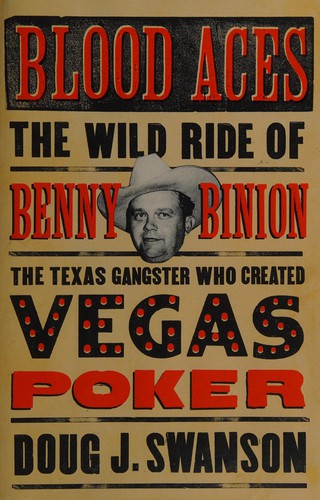
Blood Aces: The Wild Ride of Benny Binion, the Texas Gangster Who Created Vegas Poker
Pulitzer-finalist investigative biography of Benny Binion's violent Dallas rise, Leavenworth term, Fremont Street empire, and the birth of the WSOP.
View Hardcover on Amazon ↗
The Green Felt Jungle
Classic 1963 exposé examining how early Fremont Street and Strip operators transitioned from illegal rackets into licensed Nevada gaming.
View Hardcover on Amazon ↗
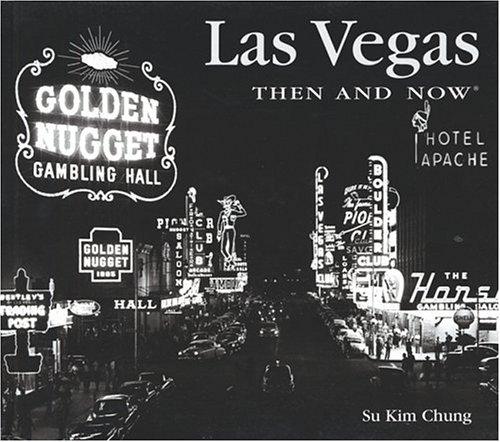
Las Vegas Then and Now
Contrasts archival views of the 1932 Apache Hotel and 1950s Binion's Horseshoe against modern Fremont Street Experience.
View Hardcover on Amazon ↗
Downtown Glitter Gulch • 1905–1995
5 Photos

1973–Present • Strip Megaresorts
5 Photos

Original 1973 MGM Grand Las Vegas: History, 1980 Fire & Bally's
Read Article →
Atomic Age Las Vegas • 1951–1962
5 Photos

Las Vegas Atomic Testing History: 1950s Mushroom Clouds
Read Article →
1946–Present • Downtown Glitter Gulch
5 Photos

Golden Nugget Las Vegas History: 1946 Opening to Steve Wynn
Read Article →
