Elvis Presley International Hotel Las Vegas History (1969–76)
Read Article →
Aladdin Hotel Las Vegas History: Tallyho Origins, Elvis and Priscilla's 1967 Wedding, and the 1998 Implosion
The Aladdin Hotel and Casino opened on April 1, 1966, at 3667 Las Vegas Boulevard South after resort impresario Milton Prell and architect Martin Stern Jr. spent $10 million converting toy magnate Edwin S. Lowe's bankrupt, casinoless 1963 King's Crown Tallyho Inn into an Arabian Nights palace, operating across three tumultuous decades until closing on November 25, 1997, and imploding its 19-story hotel tower on April 27, 1998. Crowned along Highway 91 by a 15-story, $750,000 Young Electric Sign Company (YESCO) Genie's Lamp neon marquee, the property hosted Elvis Presley and Priscilla Beaulieu's May 1, 1967 wedding and debuted the 7,500-seat Theatre for the Performing Arts in 1976.
Few parcels on the Las Vegas Strip endured sharper swings between showbiz triumph and financial or regulatory disaster. Shut down by Nevada gaming authorities in 1979 after FBI wiretaps exposed hidden Detroit Mafia control, traded through entertainer Wayne Newton and bankrupt Japanese pachinko billionaire Ginji Yasuda in the 1980s, and rebuilt as an ill-fated $1.4 billion megaresort in 2000, the property ultimately shed its Arabian domes in April 2007 to become Planet Hollywood Resort & Casino.

Milton Prell's Aladdin Hotel & Casino at 3667 Las Vegas Boulevard South circa 1966–1968, anchored by YESCO's 15-story Genie's Lamp neon pylon and Martin Stern Jr.'s scalloped Moorish porte-cochère.
In This Article • 5 Archival Photographs
Click any photo to view full size
Archival Landmark Dossier
Street Address
3667 Las Vegas Boulevard South, Paradise, NV (now Planet Hollywood)
Original Property
King's Crown Tallyho Inn (Feb 1963 • Edwin S. Lowe • zero casino)
Aladdin Opening
April 1, 1966 • Milton Prell ($10M remodel by Martin Stern Jr.)
Landmark Neon Sign
15-story, $750,000 YESCO Genie's Lamp marquee
Famous Milestone
Elvis Presley & Priscilla Beaulieu wedding (May 1, 1967 at 9:41 a.m.)
Closure & Implosion
Closed November 25, 1997; 19-story tower imploded April 27, 1998 at 7:24 p.m.
Why Did Edwin Lowe Build the 1963 Tallyho Inn on the Strip Without a Casino?
Before minarets rose at 3667 Las Vegas Boulevard South, the 34-acre site hosted one of the boldest miscalculations in Strip history. In 1961, New York toy manufacturer Edwin S. Lowe, who amassed a fortune publishing Bingo scorecards in the 1930s and acquiring the rights to the dice game Yahtzee in 1956, broke ground on a $12 million, 450-room luxury resort named the King's Crown Tallyho Inn. Soft-opened on Christmas Eve 1962 ahead of a formal February 1963 gala, the complex resembled an English Cotswolds village of half-timbered Tudor villas, cobblestone walkways, coaching inns, and fox-hunting tapestries.
Astonishing every veteran gaming executive in Clark County, Lowe built the Tallyho Inn without a single slot machine, blackjack table, or roulette wheel. Convinced that affluent convention travelers and families craved a serene European sanctuary insulated from smoky casino pits, willing to walk down the Strip when they wished to gamble, Lowe charged premium metropolitan room and dining rates to cover unsubsidized overhead.
Strip economics punished the experiment within months. Competing resorts across Highway 91 happily underpriced rooms, prime-rib dinners, and showroom cocktails as loss leaders paid for by casino table drop. Starved of gaming revenue, the Tallyho plunged into insolvency by late autumn 1963, briefly leased a tiny side room as the King's Crown Casino in 1964, and shuttered altogether until Milton Prell arrived.

Undated photo (circa ‘68) from The Magic Sign by Charles Barnard.
How Did Milton Prell and Martin Stern Jr. Launch the $10 Million Aladdin on April 1, 1966?
Nobody understood themed Strip merchandising better than Milton Prell, who had turned Club Bingo into the Moroccan-themed Sahara Hotel in 1952 and opened Downtown's neon powerhouse The Mint in 1957. Purchasing the dormant Tallyho property for roughly $10 million in acquisition and renovation capital, Prell hired prolific resort architect Martin Stern Jr. to wrap Lowe's English Tudor motel wings behind an opulent One Thousand and One Nights streetscape. Daytime and dusk sign details can be studied in the Aladdin archival photo collection.
Stern erected a sweeping, windowless white concrete casino pavilion framed by scalloped Moorish arches, pierced decorative screens, and slender minarets, housing a 30,000-square-foot gaming floor, the 500-seat Bagdad Showroom, and the Sinbad Lounge. Out along the Strip curb, Young Electric Sign Company (YESCO) designer Jack Larsen Sr. and Charles Barnard's team engineered a 15-story (150-foot), $750,000 steel-and-neon pylon topped by a giant golden Genie's Lamp blooming with animated neon smoke.
Following an invitation-only VIP preview on March 31, 1966, the Aladdin opened to the public on April 1, 1966, four months ahead of Jay Sarno's Caesars Palace across the boulevard, with cocktail servers costumed in silk harem trousers and headliners led by Milton Berle, Jackie Mason, and Eartha Kitt. When a debilitating stroke sidelined Prell, his group sold the Aladdin in 1968 for $16.5 million to Albert Parvin's Parvin-Dohrmann Corporation (renamed Recrion Corporation in 1970).

Martin Stern Jr.'s scalloped Arabian Nights porte-cochère and YESCO neon script at the Aladdin circa 1968, concealing the older English Tudor Tallyho villas in the rear.
Where Inside the Aladdin Did Elvis Presley Marry Priscilla Beaulieu on May 1, 1967?
At 9:41 a.m. on Monday, May 1, 1967, the year-old Aladdin captured worldwide front-page headlines when 32-year-old Elvis Presley married 21-year-old Priscilla Beaulieu upstairs inside Milton Prell's private second-floor executive apartment suite. Presley's manager, Colonel Tom Parker, a close friend of Prell and Aladdin publicity chief Hank Greenspun allies, chose the Aladdin specifically because reporters staked out the Sands and Sahara had no idea Presley had flown in from Palm Springs aboard Frank Sinatra's private Learjet at 3:00 a.m. to obtain a Clark County courthouse marriage license.
Nevada Supreme Court Justice David Zenoff officiated the eight-minute civil ceremony before fewer than twenty relatives and "Memphis Mafia" confidants, with Marty Lacker and Joe Esposito serving as co-best men while Priscilla wore a floor-length white silk chiffon gown studded with seed pearls and a three-foot tulle tiara veil purchased off the rack in disguise.
Immediately after vows concluded, Parker ushered a hundred credentialed photographers into the Aladdin's downstairs banquet hall before hosting a $10,000 champagne wedding breakfast featuring a five-foot, six-tiered apricot-glazed cake, roast suckling pig, poached salmon, oysters Rockefeller, and Southern fried chicken. Two years later, that Las Vegas publicity triumph helped set the stage for Elvis Presley's 1969–1976 International Hotel residency a mile away.

Undated photo (circa ‘68) from The Magic Sign by Charles Barnard.
How Did the 1976 Performing Arts Theater Coexist with Detroit Mafia Skimming?
In 1972, a Missouri investment group headed by former St. Louis Democratic politician Sam Diamond and Richard Daly purchased the struggling Aladdin from Recrion for just $5 million, immediately tapping $34 million in loans from the Teamsters Central States Pension Fund. By 1976, another $60 million expansion added a 19-story bronze-glass hotel tower, lifting inventory past 1,030 rooms, and replaced a tiny golf course behind the casino with the $10 million, 7,500-seat Aladdin Theatre for the Performing Arts.
Opened on July 2, 1976, with singer Neil Diamond earning an unprecedented $750,000 for five sold-out Bicentennial shows, the cavernous fan-shaped arena freed Las Vegas from the constraints of 800-seat dinner showrooms, booking major rock tours including Led Zeppelin, Kiss, Fleetwood Mac, Rush, and Elton John throughout the late 1970s and 1980s.
Behind the concert box office, FBI court-authorized wiretaps inside executive suites uncovered covert control by the Detroit Cosa Nostra family led by Vito Giacalone and Anthony Zerilli's associates. Federal prosecutors proved that Aladdin "entertainment director" James Tamer and Detroit attorney Charles Goldfarb vetted high-roller credit lines, controlled junkets, and skimmed casino proceeds for Michigan mobsters. Following May 1979 federal felony convictions in U.S. District Court in Detroit, the Nevada Gaming Commission revoked the corporate license and ordered state agents to padlock the Aladdin's casino cages in summer 1979 until clean buyers could be found.

Roadside perspective of the Aladdin along Las Vegas Boulevard South from Charles Barnard's sign archive, prior to the mid-1970s high-rise tower and 7,500-seat arena expansion.
What Led From Wayne Newton and Ginji Yasuda to the April 27, 1998 Implosion and Planet Hollywood?
In September 1980, Las Vegas headliner "Mr. Las Vegas" Wayne Newton teamed up with former Riviera and Landmark executive Ed Torres to buy the shuttered Aladdin for $85 million. Newton's ownership lasted barely two years; after NBC Nightly News aired broadcasts alleging organized-crime associates had helped arrange financing, triggering a famous multi-year defamation lawsuit Newton initially won before an appellate reversal, Newton sold his 50 percent stake to Torres in 1982, and the resort slipped into Chapter 11 bankruptcy in 1984. Tokyo pachinko parlor billionaire Ginji Yasuda bought the property for $54 million in 1986, becoming the first Japanese national licensed to own a major Strip casino, spent $35 million renovating it, and landed back in bankruptcy court by 1989 before vanishing shortly prior to his death.
Acquired in the mid-1990s by the Sommer Family Trust and London Clubs International, the aging 1960s–1970s Aladdin closed its doors at 6:00 p.m. on November 25, 1997. At 7:24 p.m. on Monday, April 27, 1998, after a Make-A-Wish Foundation charity guest pushed the ceremonial plunger, Controlled Demolition Inc. detonated 260 pounds of gelatin dynamite across 400 boreholes, dropping the 19-story tower into a boiling dust cloud in eleven seconds while surgically sparing the adjacent 7,500-seat Theatre for the Performing Arts, as cataloged in our Strip casino implosions timeline.
On August 18, 2000, the developers opened an entirely new $1.4 billion, 2,567-room Aladdin Resort & Casino wrapped by the Desert Passage indoor retail mall. Crippled by steep escalators that steered Strip pedestrians into the mall rather than the elevated casino floor, and battered by the post-September 11, 2001 travel downturn, the rebuilt Aladdin filed for Chapter 11 bankruptcy in September 2001, just thirteen months after opening. Purchased out of bankruptcy in 2003–2004 by Robert Earl, Bay Harbour Management, and Starwood (later acquired by Caesars Entertainment in 2010), crews stripped off every Moorish dome and genie motif, opening the modernized complex in April 2007 as Planet Hollywood Resort & Casino.
What Are the Major Ownership and Architectural Eras of the Aladdin (1962–2007)?
Across forty-five years, 3667 Las Vegas Boulevard South cycled through nine distinct ownership regimes while evolving from an anti-gambling Tudor inn into a modern entertainment megaresort.
| Date | Milestone | Owners, Architects & Impact |
|---|---|---|
| Dec 1962 / Feb 1963 | Tallyho Inn Opens | Toy mogul Edwin S. Lowe opens 450-room English Tudor inn with zero casino; fails in months. |
| April 1, 1966 | Aladdin Debuts ($10M) | Milton Prell & Martin Stern Jr. unveil Arabian Nights casino & 15-story YESCO Genie's Lamp. |
| May 1, 1967 | Presley Wedding | Elvis Presley & Priscilla Beaulieu marry in Prell's upstairs suite before $10,000 breakfast. |
| July 2, 1976 | 7,500-Seat Arena & Tower | Neil Diamond opens Theatre for the Performing Arts ($750k fee) alongside 19-story hotel tower. |
| Summer 1979 | Mob Convictions & Closure | Detroit Mafia figures James Tamer & Charles Goldfarb convicted; state shutters casino. |
| 1980 & 1986 | Newton & Yasuda Eras | Wayne Newton/Ed Torres buy for $85M (1980); Ginji Yasuda buys for $54M (1986), bankrupt 1989. |
| April 27, 1998 | 7:24 p.m. Tower Implosion | Closed Nov 25, 1997; CDI drops 19-story tower in 11 seconds while sparing 1976 theater. |
| 2000 & April 2007 | New Aladdin to Planet Hollywood | $1.4B rebuilt Aladdin (Aug 2000) goes bankrupt (2001); rethemed as Planet Hollywood (2007). |
Remarkably, the 1976 Aladdin Theatre for the Performing Arts, spared during the 1998 blast and integrated into the 2000 rebuild, still anchors the property today as PH Live at Planet Hollywood, having hosted major residencies from Britney Spears and Jennifer Lopez to Celine Dion's charity specials and Shania Twain.
Frequently Asked Questions
Why did the Tallyho Inn fail before becoming the Aladdin in 1966?
Yahtzee mogul Edwin S. Lowe opened the 450-room King's Crown Tallyho Inn in early 1963 at 3667 Las Vegas Boulevard South with zero slot machines or table games, betting vacationers wanted a quiet English Tudor hotel away from gambling. Without casino winnings to subsidize room rates, food, and celebrity shows, the Tallyho could not price-compete against neighboring Strip casinos and went bankrupt within months.
Does the room where Elvis and Priscilla married still exist at Planet Hollywood?
No. Elvis Presley and Priscilla Beaulieu married on May 1, 1967, inside founder Milton Prell's second-floor VIP apartment in the original 1960s low-rise structure, which was completely demolished alongside the 19-story tower during the 1998 site clearance. Planet Hollywood Resort & Casino stands on the same 34-acre parcel today, built around the separate 2000 hotel tower.
What happened to the Aladdin's $750,000 YESCO Genie's Lamp neon sign?
Installed by Young Electric Sign Company (YESCO) for the April 1, 1966 opening at a cost of $750,000, the original 15-story revolving Genie's Lamp sign was replaced during mid-1980s roadside marquee upgrades, and later signage was dismantled after the November 1997 closure. Surviving vintage Genie's Lamp components and design maquettes are preserved today by the Neon Museum and UNLV Special Collections.
Which part of the 1970s Aladdin survived the 1998 implosion and still operates today?
The 7,500-seat Aladdin Theatre for the Performing Arts (opened on July 2, 1976, by Neil Diamond) was deliberately shielded and spared when Controlled Demolition Inc. imploded the 19-story hotel tower yards away on April 27, 1998. Renovated and wrapped inside the Miracle Mile Shops complex, that original 1976 auditorium operates today as PH Live (formerly Bakkt Theater and Zappos Theater) at Planet Hollywood.
Curated Historical Bibliography
Recommended Las Vegas History Books
Recommended historical books and architectural studies covering this landmark. As an Amazon Associate, LasVegasArchive.com earns from qualifying purchases.
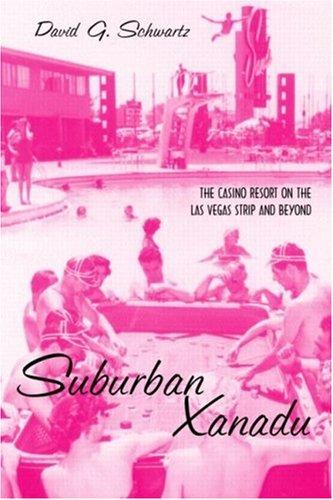
Suburban Xanadu: The Casino Resort on the Las Vegas Strip and Beyond
Contrasts Edwin Lowe's doomed casinoless Tallyho experiment with Milton Prell's themed resort formula at the Sahara and Aladdin.
View Hardcover on Amazon ↗
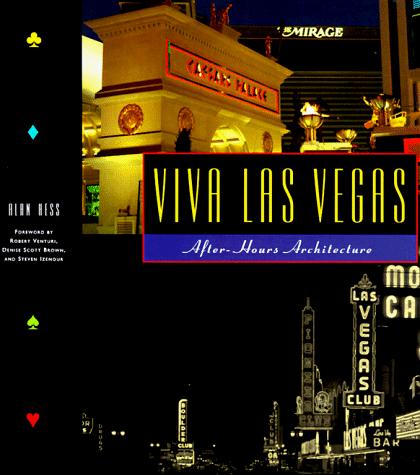
Viva Las Vegas: After-Hours Architecture
Studies Martin Stern Jr.'s scalloped Arabian Nights pavilion and YESCO's 15-story Genie's Lamp pylon as classic roadside symbolism.
View Hardcover on Amazon ↗
Super Casino: Inside the 'New' Las Vegas
Explains the late-1990s megaresort wave that drove the 1998 Aladdin implosion and the unforgiving capital math of the 2000 rebuild.
View Hardcover on Amazon ↗
Showroom Golden Age • 1969–1976
5 Photos

1947–Present • North Strip Resorts
5 Photos

Sahara Hotel Las Vegas History: Club Bingo, Prima & 1964 Beatles
Read Article →
1993–2024 • Strip Megaresort Era
5 Photos

Las Vegas Casino Implosions Timeline: Every Blast (1993–2024)
Read Article →
1989–2024 • Megaresort Era
5 Photos

The Mirage Las Vegas History (1989–2024): Volcano to Hard Rock
Read Article →
